
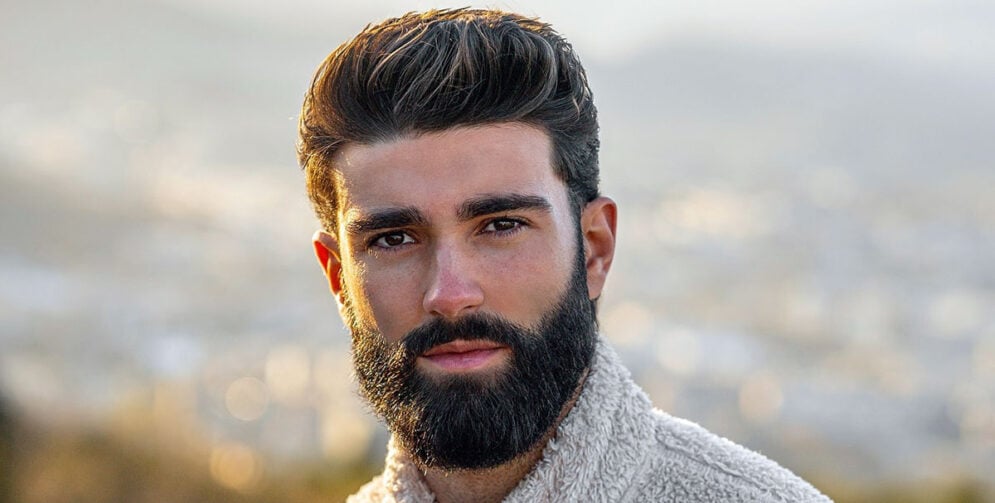
Medium-length hair gives men more movement and styling range than a short cut without requiring the commitment of shoulder-length hair. It can be parted, swept back, worn forward or shaped around a natural curl pattern. The challenge is choosing a haircut that controls the extra length instead of letting it collect around the sides, crown and ears.
I selected the styles below for more than their appearance in a finished photograph. Each one offers a distinct silhouette, direction or approach to layering, and each creates a different balance between styling freedom and daily effort. Some rely on a clean part, others on controlled volume, and several work best when the barber leaves the perimeter deliberately soft. The right choice depends on how your hair grows, how much density it has and how much time you want to spend shaping it.
Popular Medium Hairstyles For Men
Layered
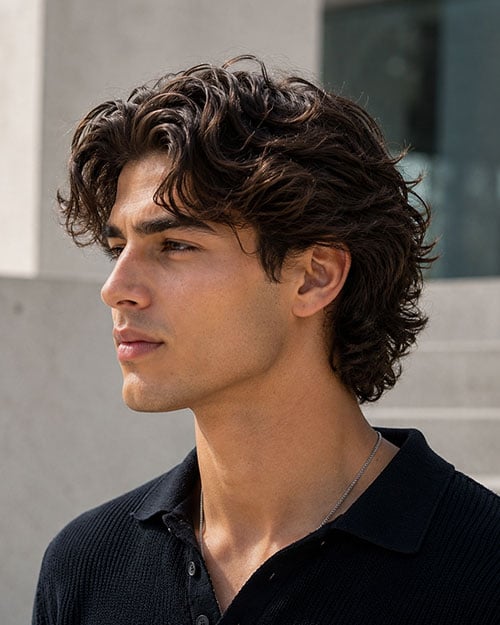
The medium-length layered haircut uses shorter internal sections to create movement while preserving a fuller exterior shape. It is the most adaptable starting point in this guide because the same basic cut can be parted, pushed back or worn with loose texture. The key is thoughtful weight placement. Fine hair generally needs longer, restrained layers so the ends remain dense, while thick hair can support more internal removal through the crown and upper sides. Ask the barber to keep the perimeter strong and explain where your hair normally becomes bulky. If every section is heavily thinned, the haircut can lose its shape and produce flyaways instead of movement. A light taper around the sideburns and neckline can keep the outline neat without turning the style into a short-back-and-sides haircut.
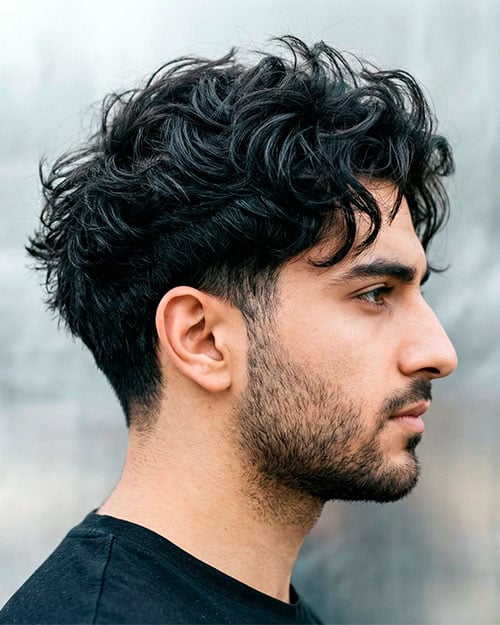
How To Style: Apply a light styling cream or volumizing mousse to damp hair, then blow-dry in the direction you intend to wear it. Use your fingers for softer separation or a vent brush for a smoother finish. Add a small amount of low-shine paste only after the hair is dry.
Best For: Straight, wavy or loosely curly hair at most densities; especially useful for men who want several styling options from one haircut.
The Textured Quiff
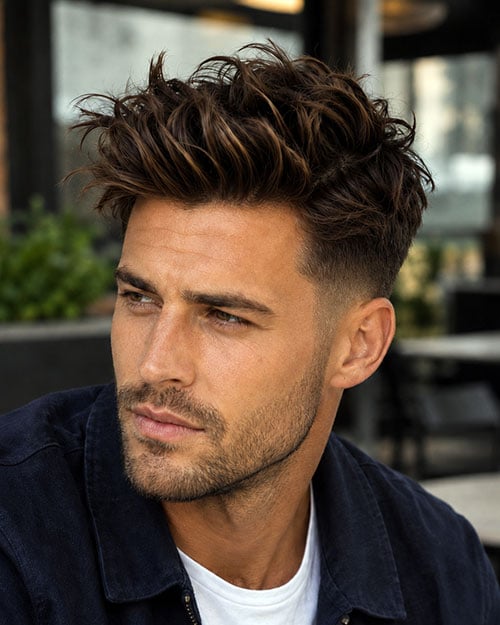
The medium-length textured quiff concentrates lift at the front while allowing the rest of the top to remain broken and movable. It offers more height than a brush back but less rigid structure than a pompadour. The front needs enough length to rise and bend, while the crown must be cut short enough to support the shape rather than collapse under its own weight. Men with thick hair may need internal weight removed behind the fringe, but the front itself should remain substantial. Fine hair benefits from lighter products and a strong blow-dry foundation. The sides can stay scissor-cut and full or transition into a taper. A very high fade can make a long quiff appear top-heavy, so the contrast should match the height you intend to build.
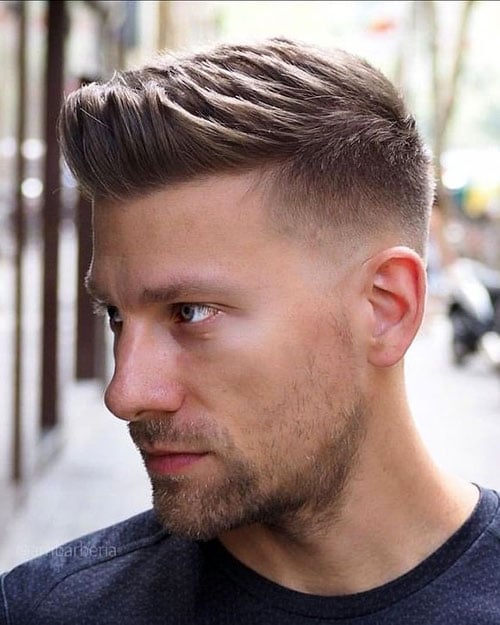
How To Style: Work volumizing mousse or a light pre-styling spray into damp hair. Blow-dry the front up and slightly back, using a vent brush or your fingers. When completely dry, pinch a small amount of matte paste through the ends rather than pressing product over the entire surface.
Best For: Straight or wavy hair with fine to medium density; round and square faces that benefit from controlled height through the front.
The Slick Back
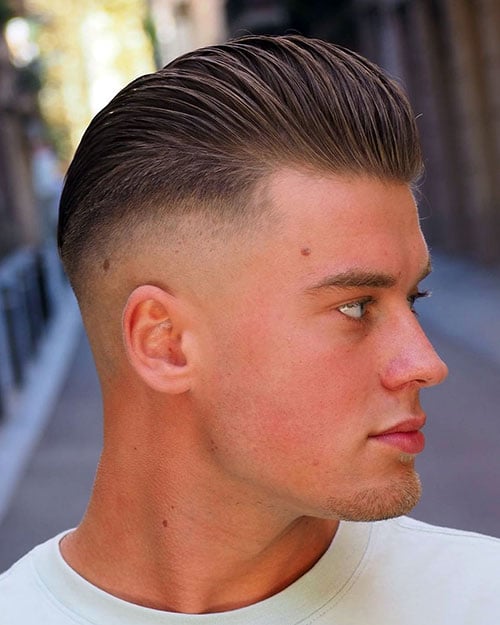
The medium-length slick back relies on consistent length and retained weight to hold the hair behind the forehead. Unlike the textured brush back, its surface is smoother and the strands follow a more unified direction. The haircut can have scissor-cut sides for a continuous classic shape or shorter sides for stronger contrast. Men with very dense hair should not assume aggressive thinning will make the style easier. Too many short internal pieces can rise through the surface and create frizz. It is often better to remove bulk selectively beneath the exterior and leave sufficient length for gravity to help. A receding hairline becomes more visible when every strand is pulled straight back, so a slight diagonal direction or looser front can provide a more forgiving alternative.
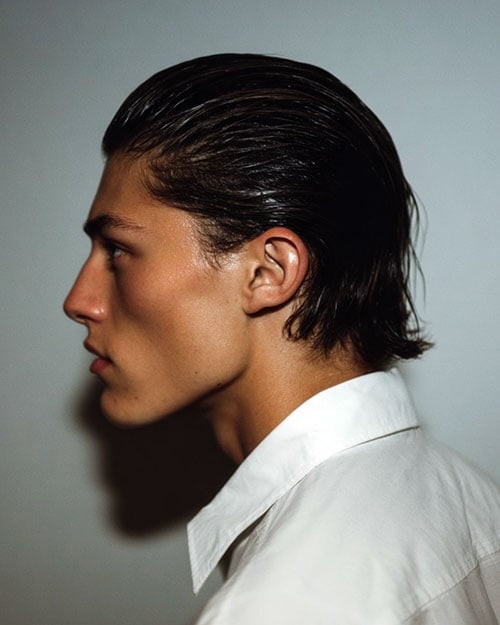
How To Style: Distribute a medium-hold cream pomade through damp hair, then blow-dry backward with a brush or wide-tooth comb. Finish with a small amount of pliable pomade for control and natural shine. Avoid loading the roots at the hairline, which can collapse the front.
Best For: Medium to thick straight or wavy hair; oval and square faces, plus men comfortable exposing the forehead and maintaining a controlled finish.
The Modern Mullet
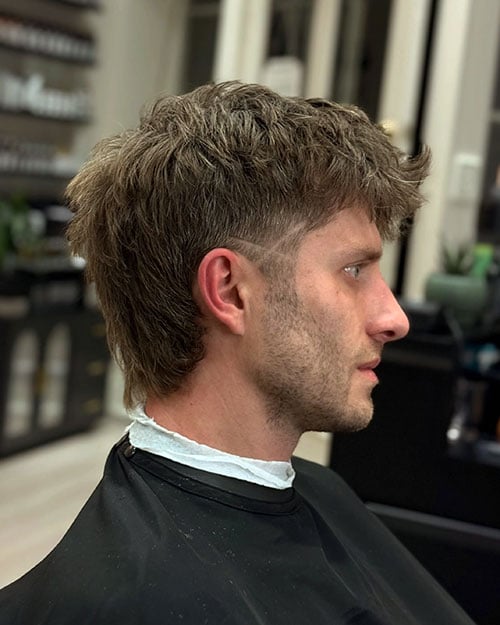
The modern mullet preserves extra length through the back while keeping the sides controlled and the top connected enough to style forward, upward or loosely parted. Its distinction is the front-to-back length progression. A subtle version may use scissor-cut sides and a modest nape, while a bolder cut can expose the area around the ears with a taper or burst fade. The barber needs to protect the back during every cleanup. Repeatedly shortening the nape will prevent the silhouette from developing and leave the haircut looking like a grown-out crop. Crown length is equally important because it must bridge the top into the longer back without creating a shelf.
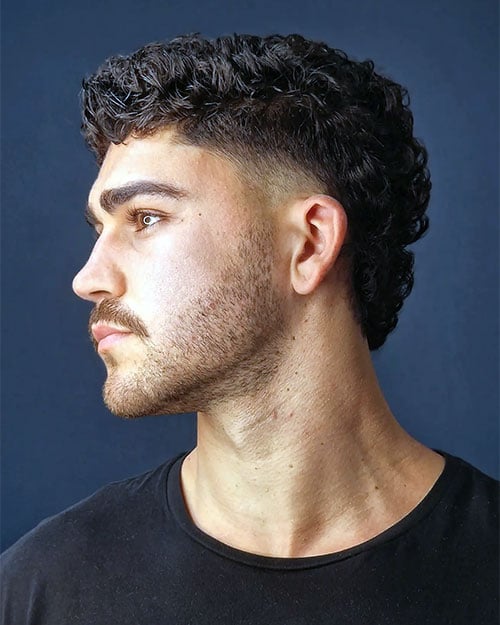
How To Style: Apply a light texturizing spray to damp hair and blow-dry the top in the preferred direction. Encourage the back to follow its natural movement rather than pressing it flat. Use matte paste through the top and crown, leaving the longer nape softer and less product-heavy.
Best For: Straight, wavy or curly hair with medium to strong density; men willing to maintain a deliberate, directional shape as the back grows.
The Side Part
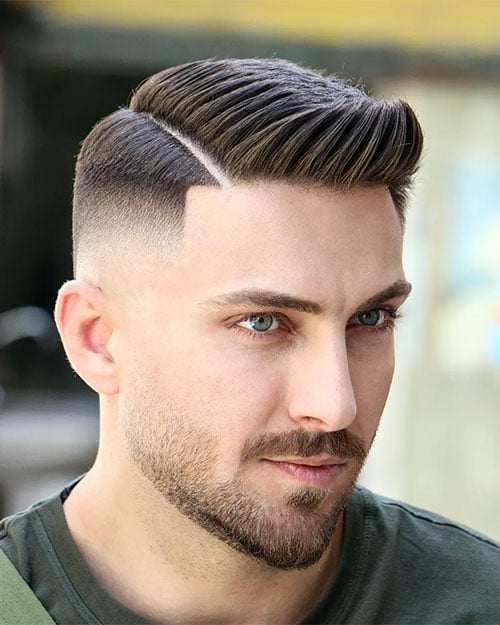
For a cleaner and more controlled result, the medium-length side part keeps the top long enough to sweep across while maintaining a deliberate division near the natural parting line. It can look polished without needing the hard, shaved part sometimes added to shorter cuts. The barber should build the shape around the direction the hair already wants to travel. Fighting a strong cowlick or reversing the natural part usually creates more work each morning. Longer side layers produce a softer, fuller profile, while a low taper makes the perimeter cleaner. Avoid taking the corners too tight if you have a long or narrow face because some width through the upper sides can improve the proportions and keep the top from appearing isolated.
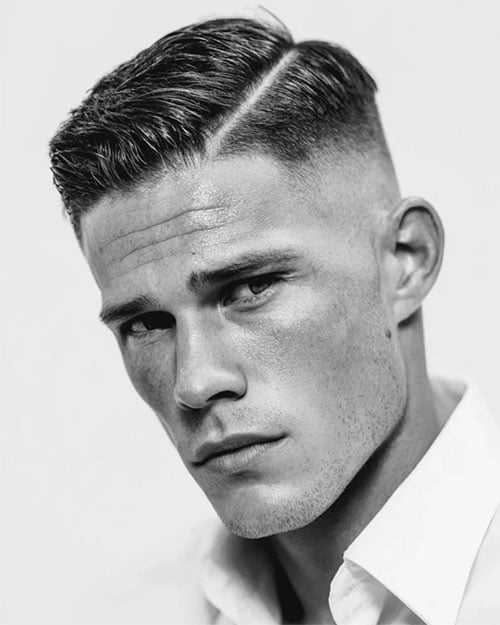
How To Style: Apply a light cream pomade to damp hair and set the part before blow-drying. Direct the larger section across and slightly back, keeping some lift at the front. Use a comb for a defined finish or break the surface with your fingers for a less formal result.
Best For: Straight to slightly wavy hair; professional settings and men who prefer a recognizable shape with moderate daily styling.
The Middle Part
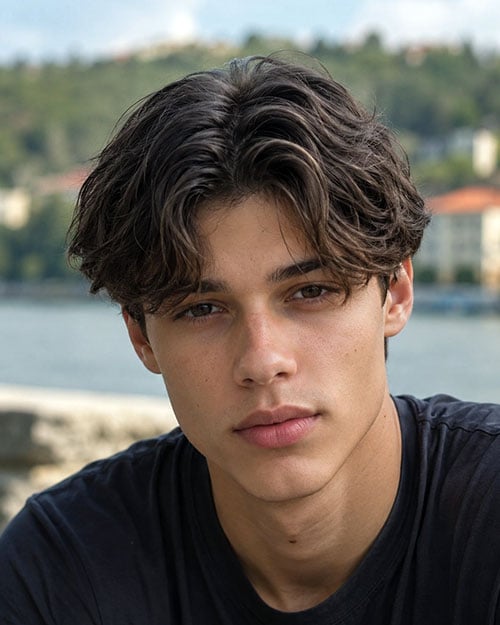
The medium-length middle part divides the fringe and allows both sides to frame the face. The strongest versions have enough length at the front to move away from the eyes and enough connection through the temples to avoid a shelf above the ears. This style is often paired with curtains, which emphasizes a more pronounced bend in the front pieces. Straight hair may need light layering and deliberate blow-drying to keep the part from falling flat. Wavy hair usually creates the opening more naturally. Men with fine density should avoid removing too much weight near the part because bright overhead light can expose the scalp. A slightly off-center part is an easy adjustment when the natural growth pattern refuses to divide evenly.
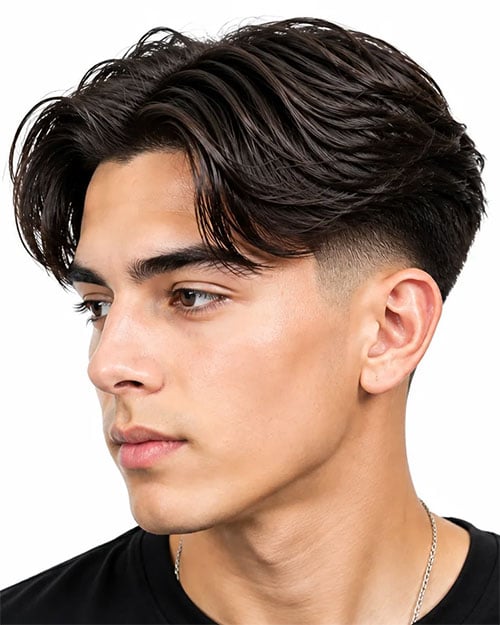
How To Style: Establish the part while the hair is damp. Blow-dry the roots upward and away from the center, directing the front pieces back before allowing them to fall. Finish with a light cream or flexible paste through the mid-lengths, keeping heavy product away from the part.
Best For: Straight to wavy hair with enough front length to reach the eyebrows or beyond; oval, square and longer face shapes with adjustable volume.
Messy Fringe
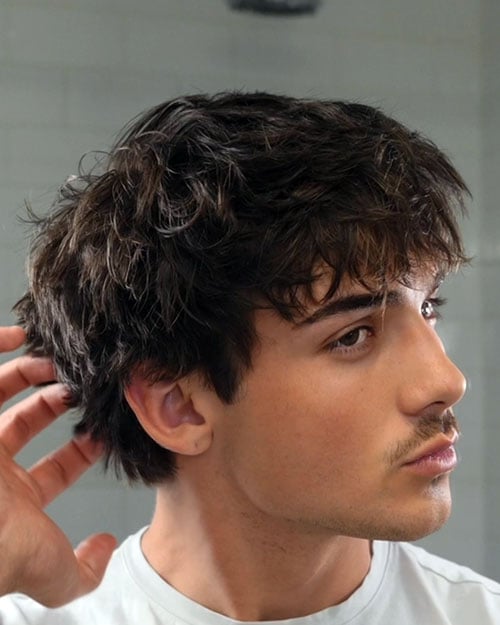
The medium-length messy fringe brings the hair forward and allows it to break across the forehead in loose, irregular sections. It is useful for men who do not want to expose the hairline or commit to a precise part. The haircut needs layering through the top so the fringe moves rather than dropping as one heavy sheet. That texture should be controlled. Excessive thinning can make fine hair look transparent and cause thick or coarse hair to expand. Ask the barber to preserve enough density around the front while reducing only the weight that prevents separation. The sides can remain soft and medium or be cleaned with a low taper. Because the fringe is long, expect to adjust it more often than the back and sides once it begins touching the eyes.
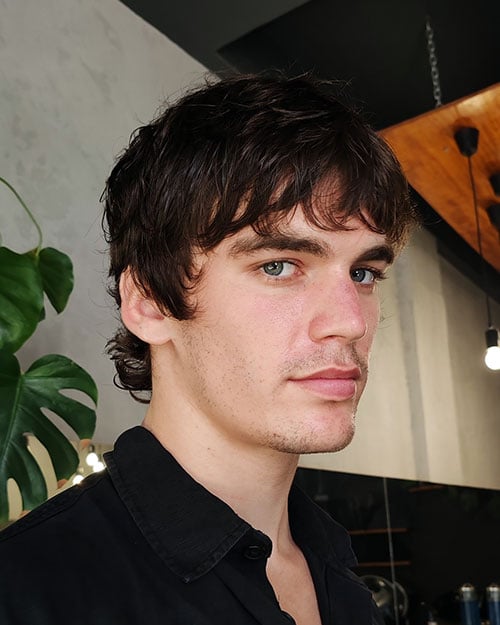
How To Style: Spray a light texturizer through damp hair and rough-dry forward, moving the fringe from side to side to prevent it setting as a solid block. Once dry, twist a trace of matte paste through selected ends. Leave some sections untouched so the finish stays loose.
Best For: Straight to wavy hair with medium or strong density; longer, oval and heart-shaped faces, plus men who prefer forehead coverage.
The Flow
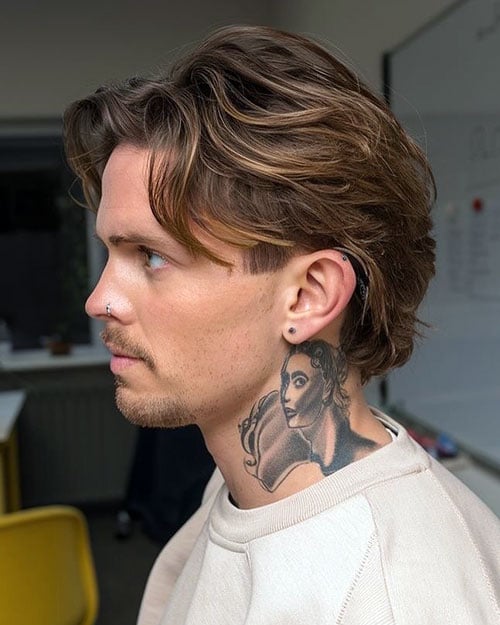
This relaxed shape is designed to move back from the face and settle around the ears and nape. A flow haircut should not look like an overgrown short cut. The sides need to connect cleanly into the top, and the back needs enough length to follow the head rather than kick outward at the crown. Longer layers keep the silhouette fluid, while selective weight removal prevents dense hair from becoming triangular. Men with strong cowlicks should show the barber how the hair sits when dry because cutting the crown too short can make it stand up. The style grows out forgivingly, but the ends still need periodic refinement. A soft taper may be added at the sideburns and neckline, although a hard fade usually interrupts the continuous movement that defines the look.
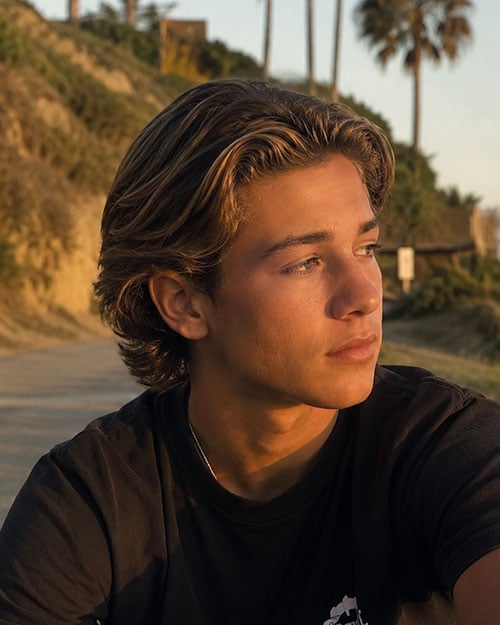
How To Style: Work a small amount of styling cream through damp hair and blow-dry backward with your fingers. Follow the natural bend instead of pulling every section tight. Once dry, use a flexible paste at the ends to guide the flow while preserving movement.
Best For: Medium to thick straight or wavy hair; men who want a relaxed shape and can allow some fullness around the sides and back.
The Comb Over
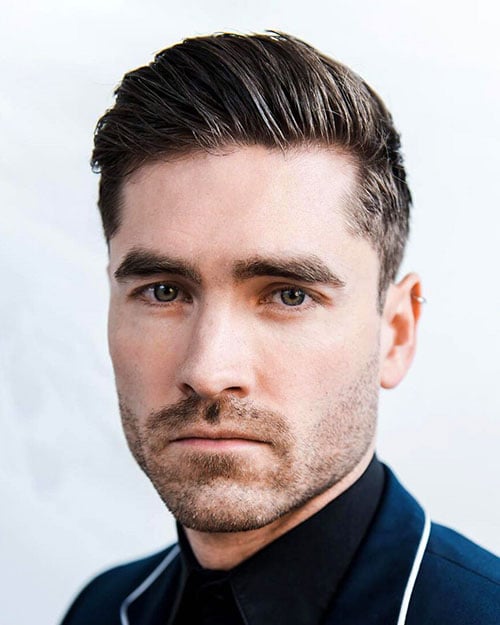
The comb over, a timeless medium hairstyle for men, combines a longer top that’s brushed across the head with shorter, defined sides, often graduated like a taper or fade. Unlike a conventional side part with fuller sides, this style paired with a taper fade creates a cleaner perimeter and more contrast beneath the sweep. A low taper produces the most balanced, professional and versatile result, while a higher taper enhances contrast and makes the separation more noticeable. The barber should follow the natural part and growth pattern rather than placing a hard line where the hair resists it. Preserve some weight near the upper sides so the longer top connects cleanly instead of hanging over the fade like an unsupported ledge.
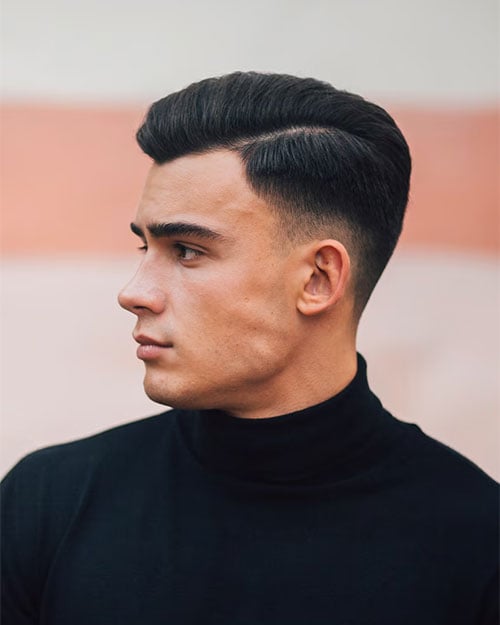
How To Style: Establish the part while the hair is damp, then apply a light cream pomade or styling lotion. Blow-dry the longer section across and slightly back, lifting the roots at the front. Finish with a comb for a polished surface or loosen selected sections with your fingers for a softer, more contemporary result.
Best For: Straight to wavy hair with medium density; professional settings and men who want a clean perimeter without giving up length on top.
The Mohawk Fade
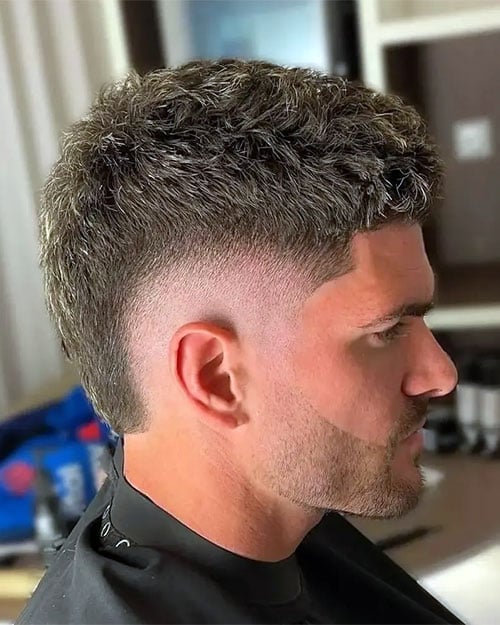
The mohawk fade preserves a medium-length strip from the front hairline through the crown while fading the sides to create strong vertical contrast. A true mohawk keeps that central section visible through the back, distinguishing it from a faux hawk that gradually blends into a conventional neckline. The width of the strip determines how dramatic the haircut appears. A wider section is easier to wear casually, while a narrow strip creates a sharper and more aggressive silhouette. The barber should maintain enough crown length to connect the front with the back and avoid leaving a gap where the head begins to curve. Straight hair creates a more defined ridge, while curls and coils produce a fuller, textured version that may require less daily shaping.
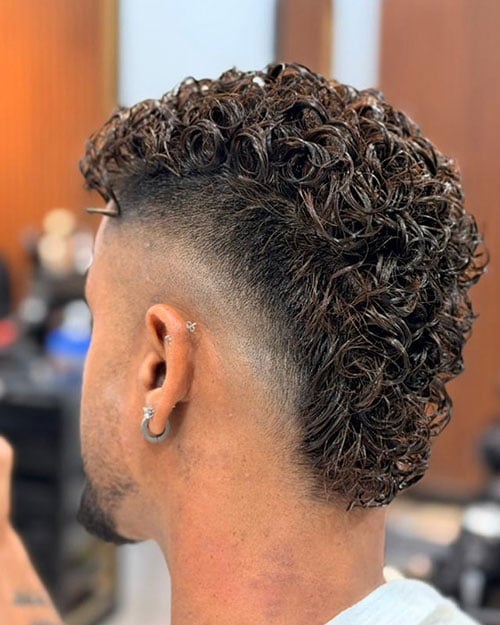
How To Style: Apply mousse, texture spray or curl cream to damp hair according to your natural texture. Blow-dry or diffuse the central section upward, working from the sides toward the middle. Finish with matte paste or firm clay for straight hair, or use a light defining cream to separate curls without making them rigid.
Best For: Straight, wavy, curly or coily hair with sufficient density through the center; men comfortable with a bold shape and regular fade maintenance.
The Textured Brush Back
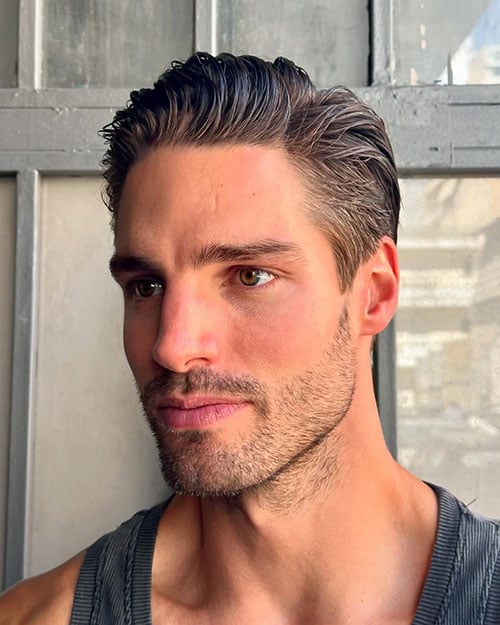
The textured brush back directs the hair away from the forehead without compressing it into a slick, uniform surface. It keeps visible separation through the top and a softer outline around the sides, making it less formal than a classic slick back. The haircut needs graduated length from front to crown so the front can lift without leaving the back flat. Thick hair often benefits from careful internal layering, but the barber should retain enough weight for the hair to stay back after it is dried. Fine hair needs the opposite approach: preserve density and create lift at the roots rather than carving texture through the ends. This style can be paired with medium scissor-cut sides or a low taper, depending on how much contrast you want.
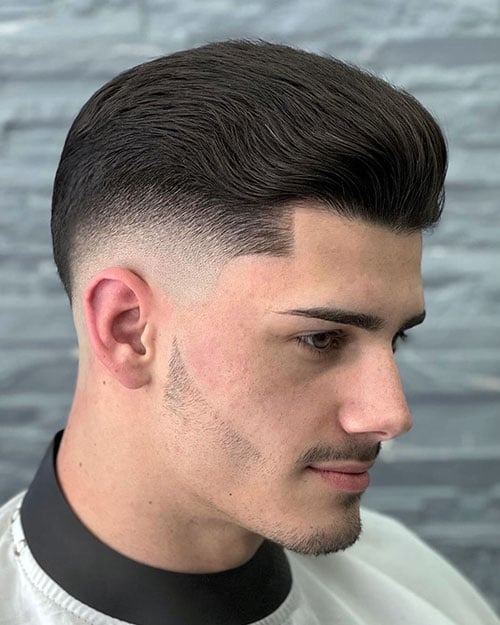
How To Style: Apply a lightweight pre-styler to damp hair, then blow-dry up and back with your fingers. Overdirect the front slightly for volume. Rub a small amount of matte paste between your hands and rake it through from back to front, then push the shape backward again.
Best For: Straight or wavy hair with medium density; round, square and oval faces when the height and side volume are adjusted carefully.
Waves
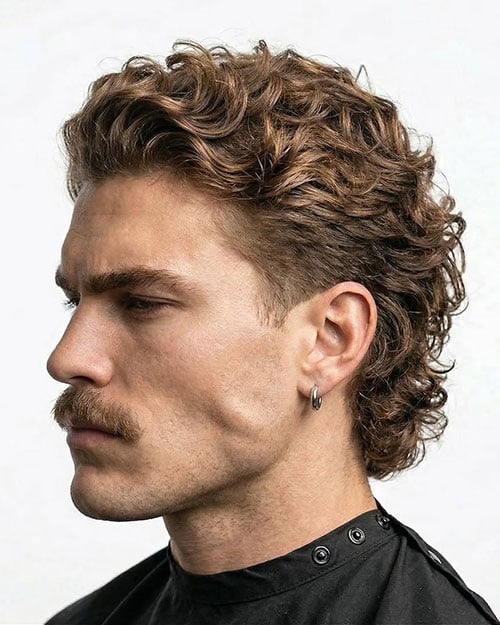
Natural wave does most of the visual work in this style, so the haircut should encourage the pattern rather than force it into a rigid outline. Medium layers can release movement and prevent the hair from gathering into a wide triangle, but enough weight must remain for recognizable bends to form. The barber should assess the hair close to its dry position because stretched, wet sections can hide how much they will rise. A soft part, loose brush back or forward fringe can all work from the same foundation. The choice depends on the wave direction around the hairline and crown. Avoid repeated thinning-shear passes through the surface. Numerous short pieces can disturb the wave groups and create a fuzzy halo instead of controlled movement.
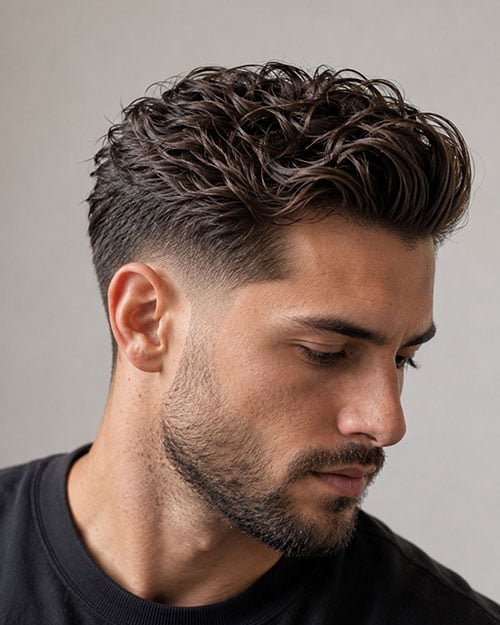
How To Style: Apply a light curl cream or sea-salt spray to damp hair and scrunch upward. Air-dry for the softest result or use a diffuser on low heat and moderate airflow. When dry, separate only a few sections with cream or flexible paste and avoid brushing through the pattern.
Best For: Naturally wavy hair at most densities; especially effective for men who want movement without building a precise shape every morning.
Curls
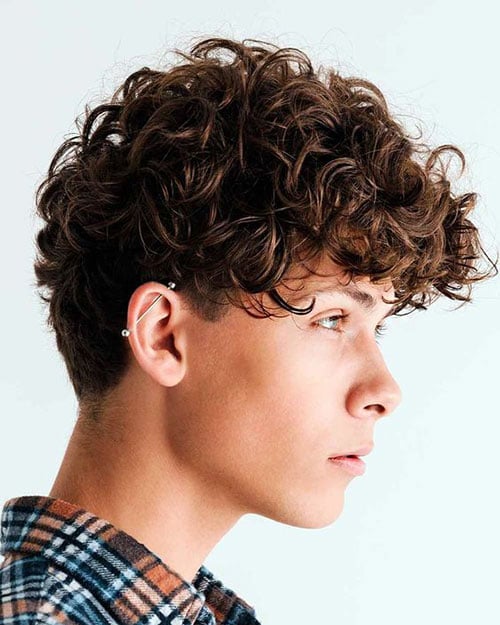
The medium-length curly hairstyle keeps enough length for the curl pattern to form while shaping the width around the temples, crown and lower sides. The finished silhouette matters more than making every curl the same length. A barber or stylist should account for shrinkage and avoid cutting the crown so short that it rises away from the rest of the shape. Dense curls may need internal weight adjusted, but indiscriminate thinning can break up curl groups and create gaps. Men who want a cleaner edge can add a low taper at the sideburns and nape without fading away the sides. The cut should be judged dry or nearly dry before the final refinements, particularly when the curl pattern varies across the head.
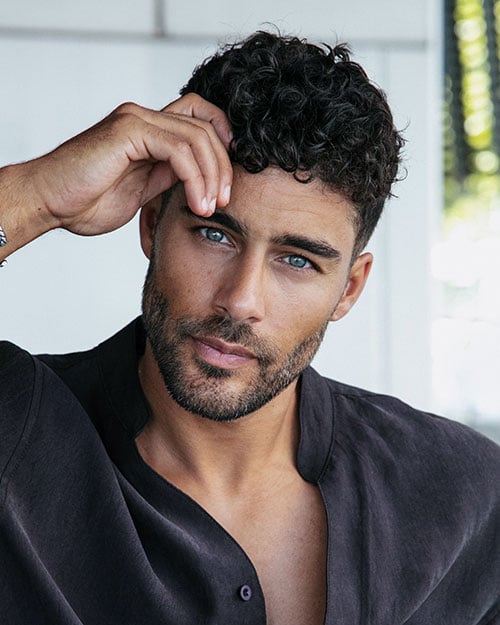
How To Style: Work curl cream or a lightweight leave-in conditioner through wet or very damp hair. Form the pattern by scrunching, then air-dry or diffuse on low heat without repeatedly touching it. Once dry, loosen the roots gently and use a trace of cream on any frizzy sections.
Best For: Loose curls through tighter curl patterns; men who want visible curl definition with a balanced, connected medium-length silhouette.
The Two Block
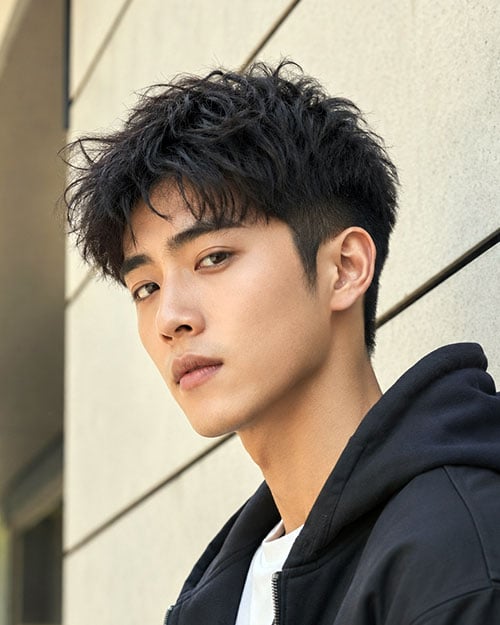
The medium two block haircut separates a longer top and fringe from shorter hair underneath and around the lower sides. Unlike a traditional undercut, the longer exterior often falls over the transition, producing a softer outline when viewed from the front. It can be worn with a middle part, curved comma fringe or loose forward texture. The danger is excessive disconnection. If the lower section is taken too high or too tight, the top may sit like a cap rather than moving into the sides. Ask the barber to tailor the hidden length to your density and head shape. Straight hair displays the cleanest separation, while wavy hair creates a softer, fuller result that may need more internal control.
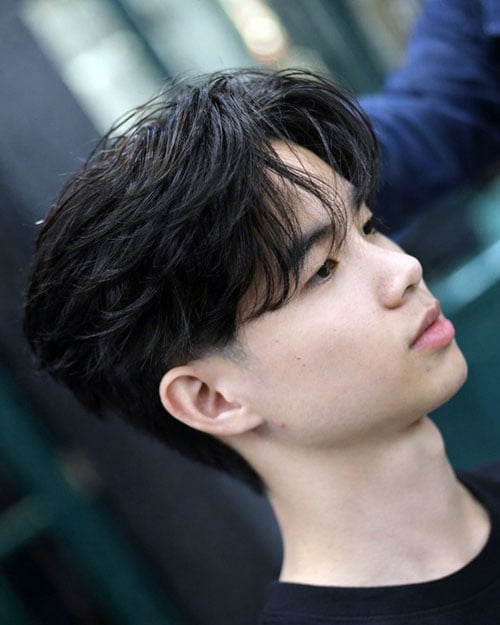
How To Style: Apply a lightweight cream or volumizing spray to damp hair. Set the chosen part or fringe direction before blow-drying, lifting the roots and bending the front with a round brush if desired. Finish with flexible wax through the ends and keep the lower sides flatter.
Best For: Straight or wavy hair with medium to high density; men who want a longer fringe with less bulk around the lower sides.
The Mod Cut
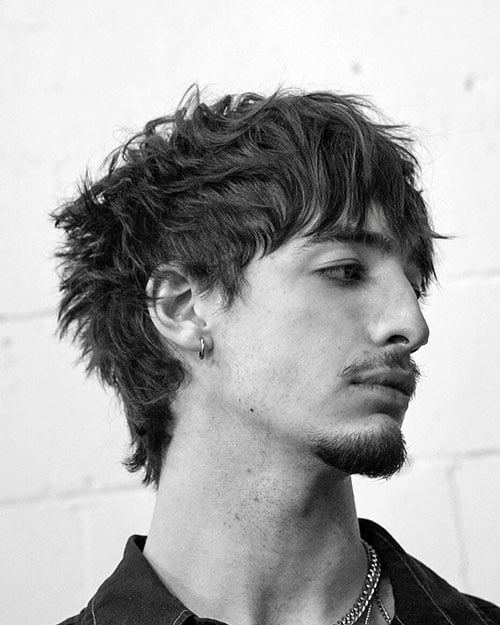
This British-inspired shape combines a longer fringe, layered crown and soft hair around the ears and nape. The mod cut is fuller and rounder than a mullet, but more directional than a general shag. Its character comes from the forward movement and the way the perimeter remains visible rather than being erased by a fade. Straight hair can produce a cleaner, graphic outline, while wavy hair makes the layers look looser. The barber should keep the crown connected to the fringe and avoid hollowing the sides excessively. A discreet taper may tidy the sideburns and neckline, but a high fade changes the silhouette and moves the haircut away from its defining shape.
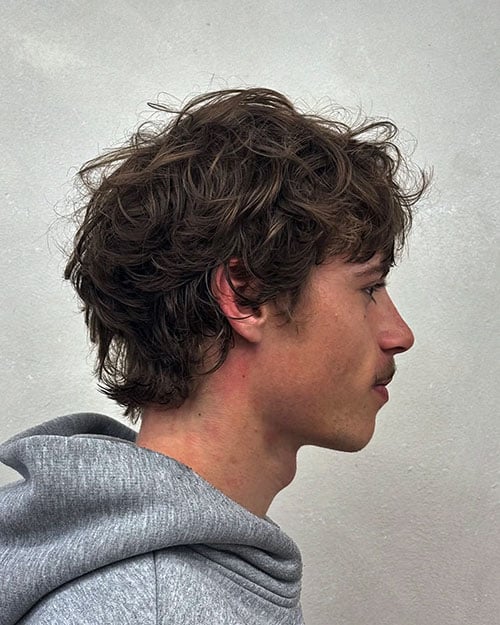
How To Style: Work a light styling cream or sea-salt spray through damp hair and dry it mostly forward, using your fingers to encourage separation. Lift the crown slightly and allow the fringe to fall naturally. Finish with a small amount of flexible paste at the ends rather than coating the entire top.
Best For: Straight to wavy hair with medium or thick density; men comfortable with a fuller fringe and visible length around the ears.
The Shaggy Look
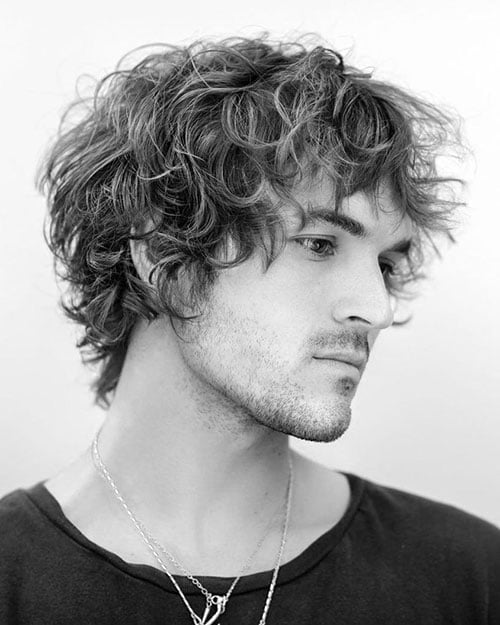
The medium-length shag uses layers throughout the haircut to create a loose, irregular silhouette with movement around the face, crown and nape. It is less extreme than a wolf cut because the contrast between the upper and lower layers is usually softer. The best shag cuts look relaxed without losing the perimeter. Fine hair needs restrained layering so the ends do not become sparse, while thick or wavy hair can support more internal variation. Razor work can create a feathered finish on suitable hair, but dry, coarse or frizz-prone textures may respond better to carefully placed scissor cutting. The shape should suit the natural fall, since forcing a shag into a highly polished finish works against the haircut.
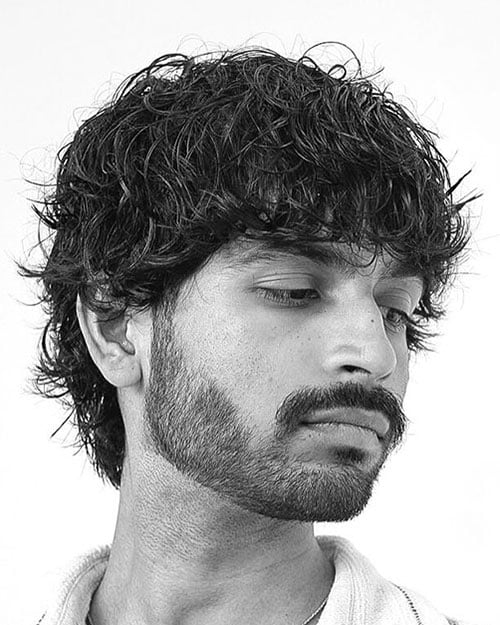
How To Style: Apply a light mousse, curl cream or sea-salt spray to damp hair based on your texture. Scrunch or rough-dry without overdirecting the layers. Once dry, use a small amount of paste on selected ends and leave the remaining movement soft and imperfect.
Best For: Straight, wavy or curly hair with enough length to show layering; especially good for men who prefer an unstructured, low-polish finish.
The Wolf Cut
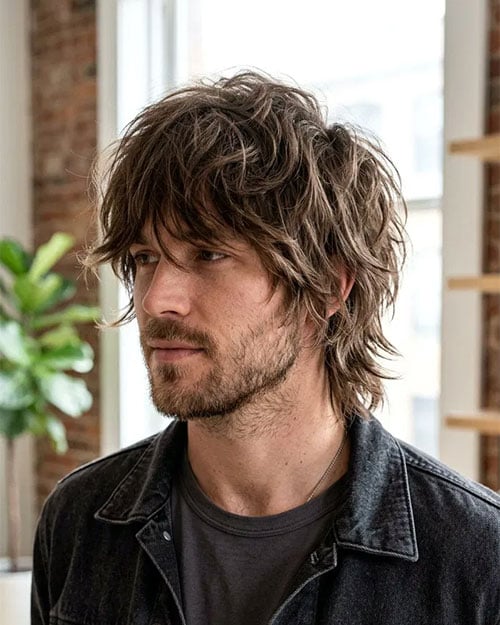
The more exaggerated relative of the shag builds noticeable volume through the crown before narrowing into longer, lighter layers around the sides and back. A wolf cut should show a deliberate change in weight, not merely uneven ends. The crown layers create lift, while the longer nape gives the haircut its stretched silhouette. Thick and wavy hair often support the shape naturally. Fine hair can wear a softer version, but excessive short layering may expose the scalp or make the lower perimeter look weak. Ask how dramatic the crown-to-nape contrast will be before cutting. A subtle taper can clean the edges, although a strong fade will reduce the shaggy continuity that makes the style recognizable.
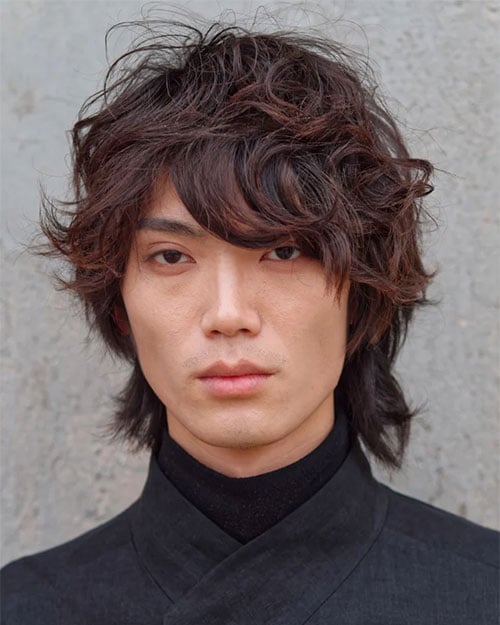
How To Style: Apply mousse or sea-salt spray to damp hair, concentrating at the roots and crown. Rough-dry while lifting the shorter layers, then scrunch or twist the longer sections. Finish with a light matte paste at the ends and avoid smoothing away the separation.
Best For: Medium to thick wavy or straight hair; men who want visible crown volume, layered texture and a more expressive silhouette.
Pompadour
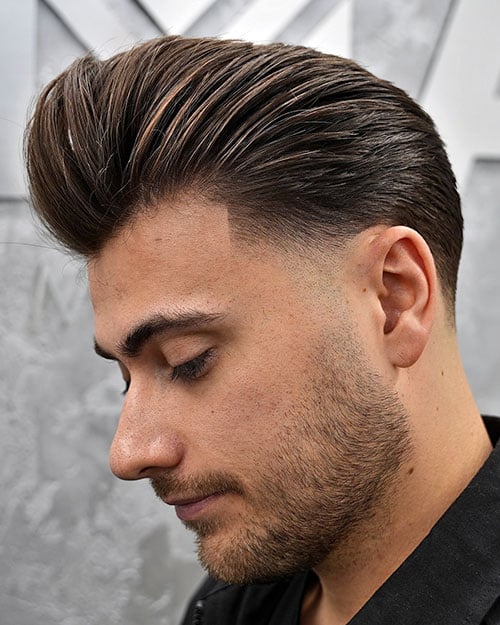
The highest-volume option shapes the front upward and backward into a deliberate curve, with the height gradually reducing toward the crown. A medium-length pompadour requires more structural cutting and styling than a quiff. The front must be long enough to roll back, but the interior needs support so the shape does not split or fall forward. Straight and slightly wavy hair are the easiest to control. Very thick hair can work, although it may require careful debulking and a stronger drying routine. The sides may be tapered or left with a classic scissor-cut fullness. Keeping some weight near the temples generally produces a more balanced profile than stripping the sides extremely high beneath a large top.
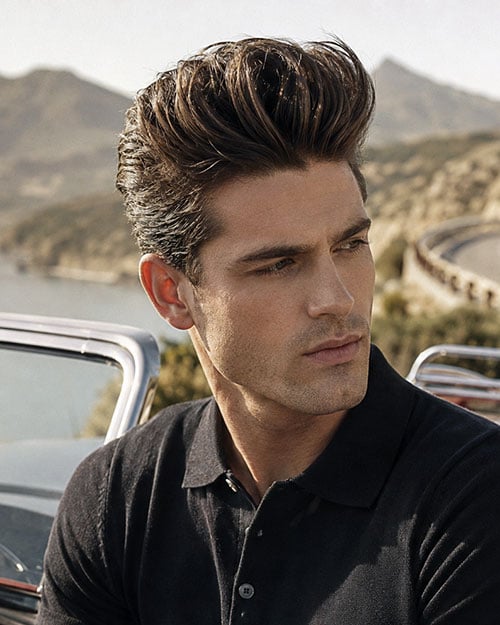
How To Style: Apply volumizing mousse to damp hair, then use a round brush to lift the front and guide it back. Dry the roots completely before shaping the curve. Finish with a firm but workable paste or pomade, applying it through the interior before smoothing the outside lightly.
Best For: Straight to slightly wavy hair with medium or thick density; men prepared for a higher-effort style and regular shape maintenance.
The Warrior Cut
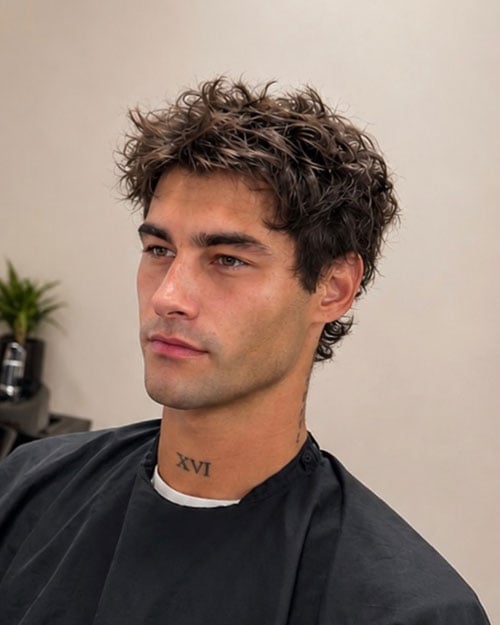
The warrior cut is a trending medium-length men’s hairstyle defined by heavily textured layers that create an intentionally uneven, spiked silhouette. Inspired by Brad Pitt’s haircut in Fight Club, it has more length and movement than a conventional spiky haircut. The top should remain long enough to push upward, forward or diagonally, while the sides are shortened without being faded excessively close. Point cutting can produce the irregular separation, but the barber must preserve enough weight for the longer pieces to stand without becoming thin or stringy. Thick hair supports the shape particularly well, while fine hair requires restrained layering and more lift from the blow-dry. Ask for a choppy, disconnected finish with softer sides and visible movement through the crown rather than uniformly short spikes.
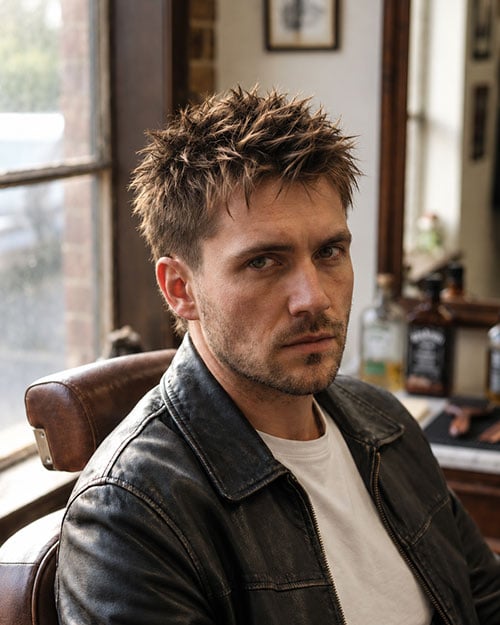
How To Style: Apply volumizing mousse or texture spray to damp hair. Blow-dry while lifting sections upward and directing them slightly forward. Once dry, work a small amount of matte clay through the interior, then pinch individual pieces into place. Avoid smoothing the surface because the uneven separation is what gives the haircut its character.
Best For: Straight or slightly wavy hair with medium to thick density; men who want a deliberately rugged, high-texture finish.
The Modern Bowl Cut
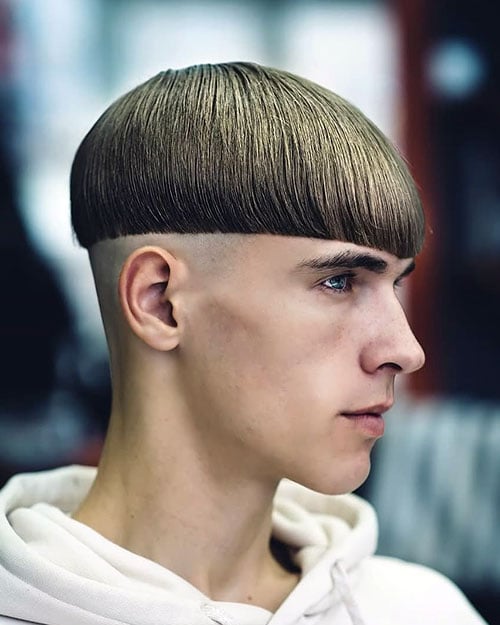
The modern bowl cut retains the rounded outline and forward fringe of the traditional version but replaces its rigid weight line with softer texture and more controlled graduation. Medium length through the top lets the hair follow the shape of the head, while subtle layering keeps the perimeter from looking too heavy. The sides may cover part of the ears or be shortened beneath the longer exterior, depending on how graphic you want the result to look. Thick, straight hair produces the strongest outline, although wavy hair can create a looser interpretation. Ask the barber to keep the silhouette rounded while breaking up the fringe and ends. Removing too much internal weight can make the haircut collapse, so texture should soften the shape without eliminating its recognizable structure.
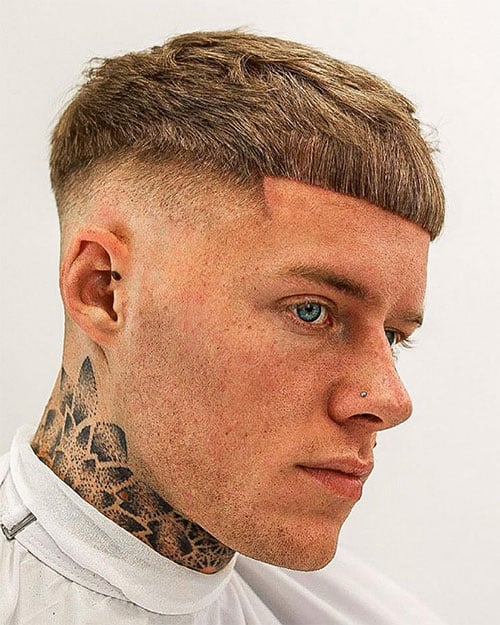
How To Style: Apply a light styling cream or smoothing spray to damp hair, then blow-dry the hair forward from the crown. Use your fingers for a textured finish or a vent brush for a cleaner curve. Once dry, separate the fringe with a small amount of flexible paste and leave the sides relatively natural.
Best For: Straight or slightly wavy hair with medium to strong density; oval, longer and angular face shapes that suit a fuller rounded outline.
What Is Medium-Length Hair For Men?
Medium-length men’s hair generally has enough length to bend, part or sweep into a chosen direction, usually about three to six inches through the top. The sides and back may remain medium or be shortened with a taper, depending on the hairstyle. Texture matters as much as measurement. Three inches of straight hair may sit close to the head, while the same stretched length in curly hair can appear considerably shorter. The useful distinction is behavior: medium hair moves and can support layers, but it has not yet gained the weight and drop associated with long hair.
Choosing A Men’s Hairstyle
Start with direction. If your hair naturally falls away from the face, a flow, brush back or slick back will usually cooperate. If it falls forward, a messy fringe, mod cut or two block may require less daily correction.
Then consider density. Fine hair generally looks fuller with a stronger perimeter and fewer layers, while dense hair may need carefully placed internal weight removal. Natural texture should influence the finish as well. Waves, curls and coils usually look better when the cut supports their pattern instead of forcing them into a straight-haired template.
Finally, be honest about styling. A shag or loose flow can tolerate variation, but a pompadour or precise middle part requires deliberate drying.
How To Style Medium-Length Hair
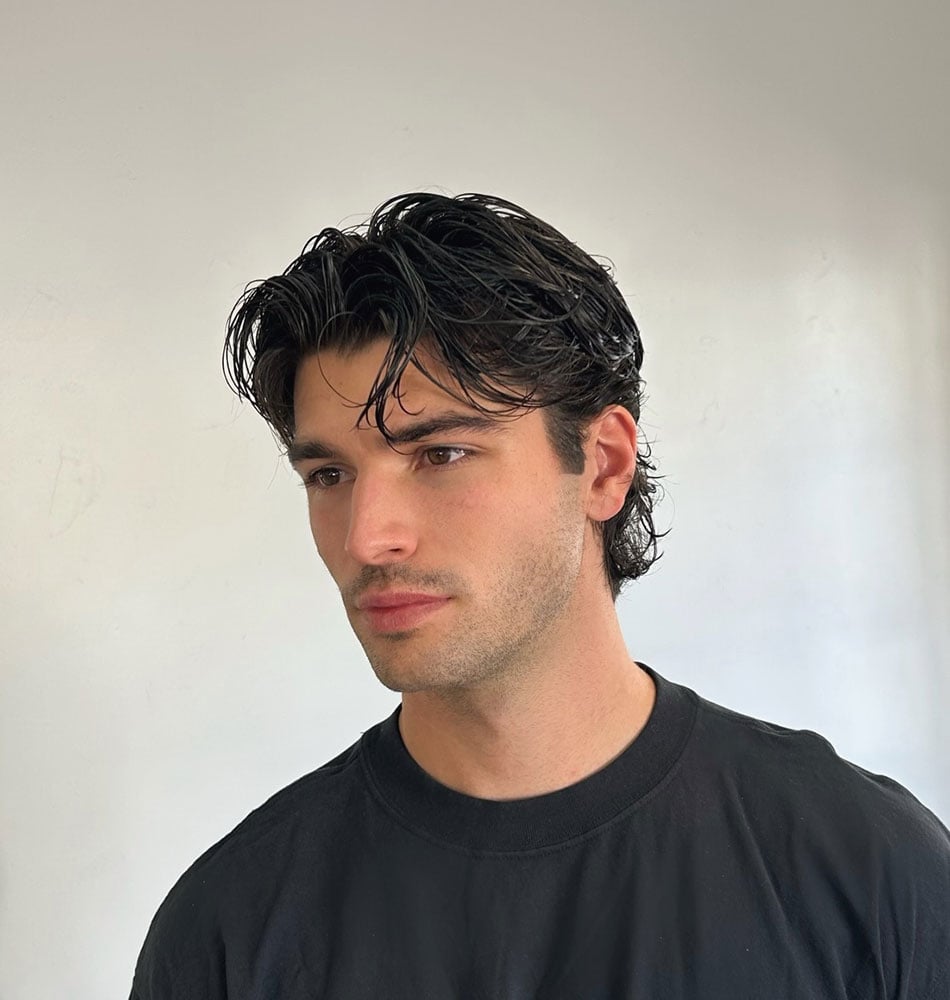
Medium-length hair responds best when direction is established before the finishing product is added. Use a light cream, mousse or texture spray as the base, then choose a flexible finisher that supports movement rather than coating the hair heavily.
- Begin with damp hair. Press out excess water with a towel instead of rubbing aggressively, which can encourage frizz and disturb curls.
- Apply a light base product. Use mousse or volumizing spray for lift, styling cream for control, or curl cream for natural texture.
- Set the direction early. Establish the part, fringe or backward movement before drying so you are not fighting the hair after it has settled.
- Dry the roots completely. Lift with your fingers or a brush for volume, or use a diffuser on low heat to preserve waves and curls.
- Add the finisher sparingly. Work a small amount of paste, cream or pomade through the back and mid-lengths before touching the front.
- Refine without flattening. Separate selected pieces, control flyaways and stop before repeated handling removes the movement you created.
What To Tell Your Barber
When talking to clients before an appointment, I always tell them to bring photographs showing the front, side and back of a haircut that they want. I emphasize finding examples with similar texture and density to their own. You’ll need to explain where you want the length to sit around the eyebrows, ears and neckline, then describe how you plan to wear it most days.
The most important choices are the part or styling direction, how much weight remains through the sides, whether the perimeter should be natural or tapered, and how strongly the haircut should be layered. If your crown, hairline or temples behave unpredictably, point that out before the hair is wet. A clear description of the result is more reliable than asking for a fashionable name alone.
How Often Should Medium-Length Hair Be Cut?
Most medium-length hairstyles benefit from reshaping approximately every 4 to 8 weeks, but the ideal interval depends on the outline. A tapered neckline, exposed ears or precise fringe will look untidy sooner than a soft flow, shag or layered cut. Book earlier when the sides begin to widen, the fringe blocks your vision, the crown collapses or the ends stop following the intended direction. If you are growing the hair longer, ask for a maintenance trim that protects overall length while correcting weight and cleaning only the perimeter that needs attention.
FAQs
What Is A Medium-Length Men’s Haircut?
Medium-length hair for men is typically defined as long enough to bend, part, sweep or flow, but shorter than hair that consistently reaches the shoulders. It is often around three to eight inches on top, although natural texture, shrinkage and the length of the sides can change how the haircut appears.
What Is the Easiest Medium Hairstyle To Maintain?
A layered flow or natural wavy men’s hairstyle is typically the easiest choice to make because small changes in direction do not ruin the intended finish. The haircut must still control bulk around the ears and crown. Precise middle parts, pompadours and slick backs generally require more deliberate drying and product.
What Products Work Best For Medium Men’s Hair?
Choose the product according to the intended finish. Styling cream provides soft control, mousse or volumizing spray builds lift, matte paste creates separation, pomade supports smoother shapes, and curl cream defines waves or curls. Medium hair usually responds better to small layered applications than one heavy dose of product.
Should Medium-Length Hair Be Cut with Scissors or Clippers?
Scissors usually do most of the shaping because they allow the barber or stylist to preserve length, build layers and control weight. Clippers may still be useful for a taper, underlayer or cleaner perimeter. A strong medium-length haircut often combines tools instead of treating scissors and clippers as competing choices.
Should I Visit A Barber or Hairstylist To Cut A Men’s Medium-Length Hairstyle?
Choose the professional whose portfolio shows the type of work you want. Some barbers specialize in longer scissor cuts, while some hairstylists are more experienced with layers, curls and extended shapes. Review finished cuts similar to your hair and ask how often the professional works with that length and texture.
The best medium-length hairstyle is the one that follows your hair’s natural behavior while giving it a deliberate outline. Decide on direction and silhouette first, then adjust the layers, perimeter and styling finish to your density and routine. That approach will produce a better result than copying a photograph without accounting for the hair underneath it.
