
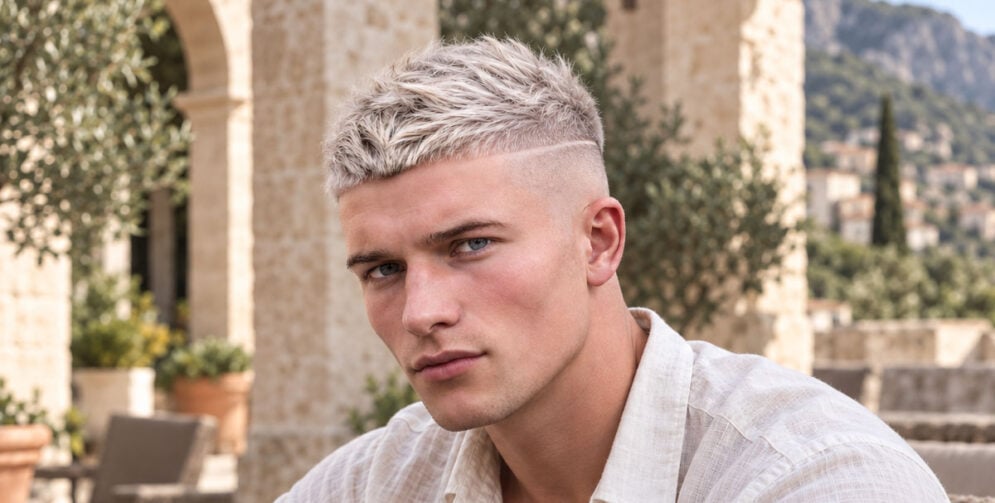
The French crop is a short men’s haircut built around forward movement, a defined fringe and neatly controlled sides. It can be worn blunt and orderly, cut choppy and textured, left longer for a shaggy finish or paired with anything from a conservative taper to a bare-skin fade. Long associated with military grooming, this combination of clean structure, stronger contrast and low-effort styling allows the cut to work in both casual and professional settings.
Here are 21 of the best French crop variations that look stylish, each with practical styling instructions, hair product recommendations and expert guidance for recreating the look at home.
What Is A French Crop?
A French crop is a soft, low-maintenance men’s haircut that has short to medium length on top and directs the hair forward, finishing the look with a visible fringe. The sides and back are typically tapered or faded, but the front is what gives the haircut its identity. A classic version looks compact and controlled, while newer interpretations introduce rough texture, curls, longer movement or stronger contrast.

The shape depends on how the top, fringe and sides work together. The top needs enough length to travel forward from the crown without splitting or standing upright, while the fringe should be checked when dry so its final position is clear. The sides can retain weight with scissors or a taper, or create more contrast with a fade. A good barber adjusts those elements around the crown, temples, density and head shape instead of copying the reference photograph exactly.
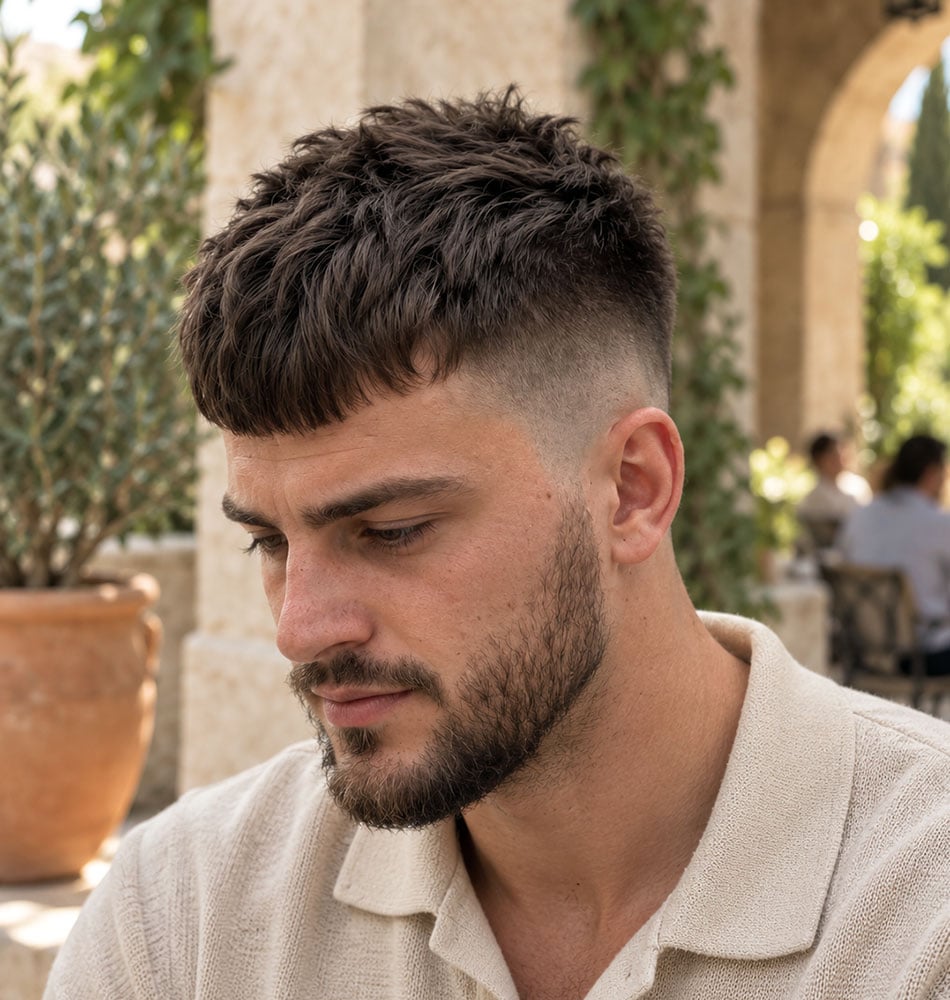
The cut is often confused with the Caesar and textured crop. A Caesar generally keeps the top more uniform and the fringe shorter. A textured crop places greater emphasis on choppy separation and may have a less defined front edge. In practice, the names overlap, so the photograph, fringe length and desired finish matter more than the label alone.
Best French Crop Haircuts For Men
1. French Crop with Mid Fade
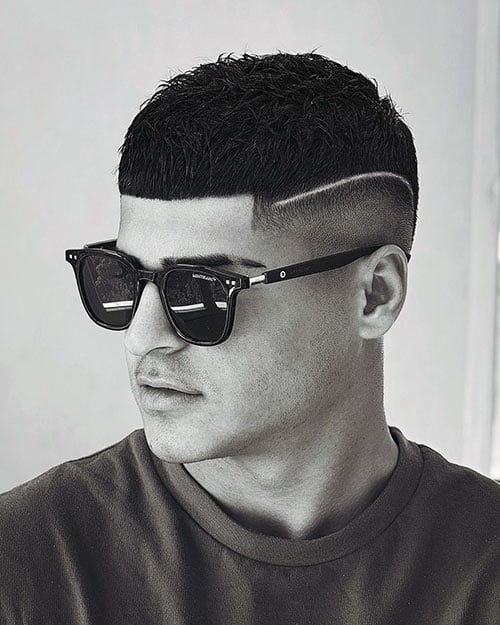
The French crop with a mid fade is the most balanced, versatile and popular, removing clear weight without exposing as much of the head as a high fade. It works with either a blunt or textured fringe and gives the cut a cleaner, more defined profile. Placement should follow the parietal ridge, where the head begins to round. Push the blend above that point and the top can look narrow or disconnected, especially around prominent temples. Ask the barber to preserve enough corner weight to support the forward shape. Because the fade covers more visible space than a taper, regrowth will show sooner even when the top still looks controlled.
How To Style: Blow-dry the top forward with moderate lift at the roots, then apply a matte paste or clay from the crown toward the fringe. Keep the sides free of product. A small amount of separation on top prevents the clean fade from making the entire haircut appear overly rigid.
Best For: Straight, wavy or thick hair; oval, square and round faces when the top keeps enough height and width for balance.
2. Textured French Crop
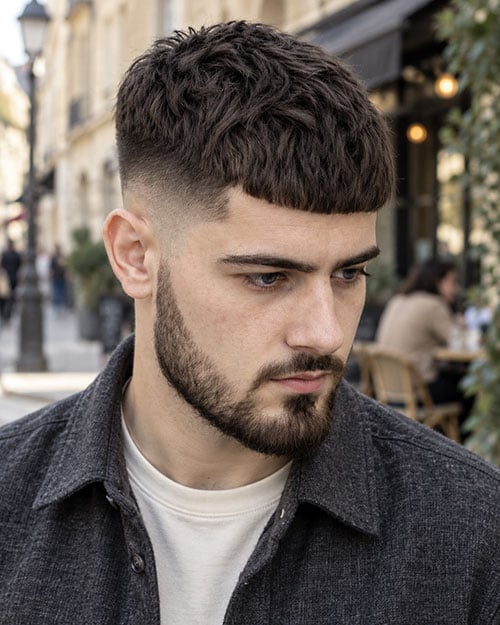
The textured French crop is the most adaptable version of the cut. The top is broken into visible sections, with uneven movement and a fringe that looks deliberately irregular rather than perfectly straight. The texture should come from the haircut’s structure, not aggressive thinning. On dense hair, the barber can remove internal weight to create separation. Finer hair needs the opposite approach, with enough density preserved to keep the fringe from looking transparent. Coarse hair can also stand up if the top is cut too short or thinned too heavily. Ask for enough length through the crown to move forward, then choose a taper or fade based on how much contrast you want at the sides.
How To Style: Start with slightly damp hair and apply a light pre-styler if extra control is needed. Blow-dry forward while lifting small sections with your fingers, then work a pea-sized amount of matte clay or paste from back to front. Pinch only a few pieces at the fringe so the texture remains natural.
Best For: Straight, wavy or dense hair; oval, square and round faces when the top retains enough lift to balance the fringe.
3. Classic French Crop
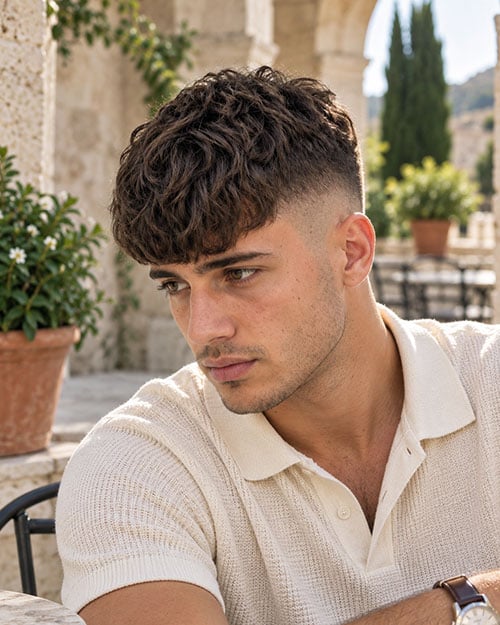
The cleaner, more timeless look. The classic French crop has a short defined fringe and elegasides and back that still focus attention on the longer top. It sits flatter than a heavily textured crop and looks more deliberate, which makes it easy to wear in professional settings. The top still needs enough length to travel forward from the crown. Cut it too short and the surface may split instead of forming one continuous shape. A soft taper keeps the proportions balanced and leaves the front as the focal point. I would preserve some weight near the temples and avoid a severe disconnection. It grows out more naturally than a skin-faded version, although the fringe will need reshaping once the line starts to soften.
How To Style: Comb or finger-style towel-dried hair forward, then use a small amount of low-shine paste or styling cream. A brief pass with the dryer will set the direction, but keep the airflow low and close to the head. Flatten the surface lightly instead of separating every strand.
Best For: Straight or slightly wavy hair with moderate density; oval, square and heart-shaped faces that suit a tidy, horizontal fringe.
4. French Crop with Low Fade
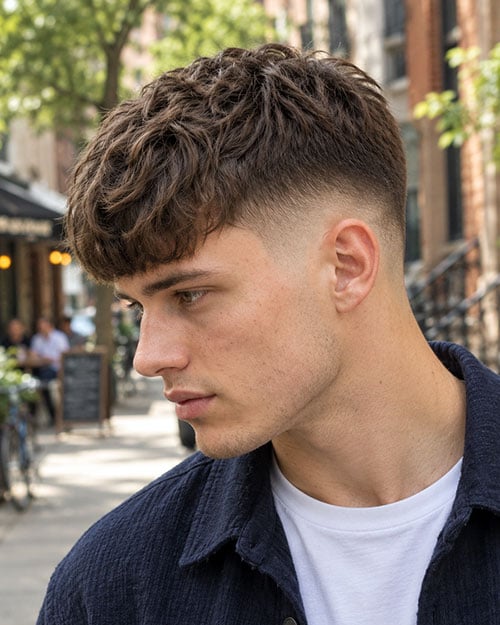
A low fade cleans up the edges without stripping away all the weight at the sides. The transition stays close to the ears and neckline, leaving enough darkness above it to support the forward shape. That softer contrast is easier to adapt around prominent temples, a longer face or an uneven head shape than a high fade. The top can be smooth or textured, but the connection into the heavier upper sides should look intentional. Ask where the shortest section will begin instead of relying on the word low, since every barber places it slightly differently. The fade will soften after a few weeks, but the extra coverage above it helps the overall haircut remain balanced as it grows.
How To Style: Direct damp hair forward with a dryer and use your fingertips to create light separation near the front. Finish with a matte paste for flexible control or a cream if the hair tends to look dry. Avoid packing product into the roots, which can flatten the top against the heavier sides.
Best For: Most straight and wavy textures; oval, oblong and square faces, especially when a higher fade would remove too much side weight.
5. Low Taper French Crop
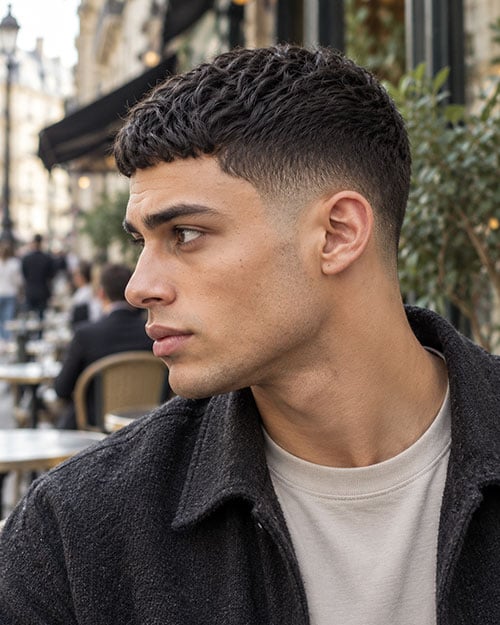
The low taper French crop cleans up the sideburns and neckline while leaving most of the sides at their natural length. It is subtler than a low fade because the shortest work stays around the perimeter instead of spreading across the side of the head. The result feels softer, grows in cleanly and fits easily into a professional setting. It also works well for men whose facial features or head shape look better with some weight at the sides. The barber should still remove enough bulk above the ears to keep the shape intentional, but taking the taper too high defeats the purpose. Pair it with a relaxed top rather than an overly rigid finish so the softer outline and forward movement feel connected.
How To Style: Apply a light styling cream or paste to damp hair, then dry the top forward with a slight diagonal movement rather than forcing every strand straight down. Use the residual product on your hands to settle the fringe. Keeping the finish flexible matches the taper better than a rigid, heavily separated top.
Best For: Straight, wavy or lightly curly hair; most face shapes and men who prefer softer contrast with an easier grow-out.
6. Short French Crop
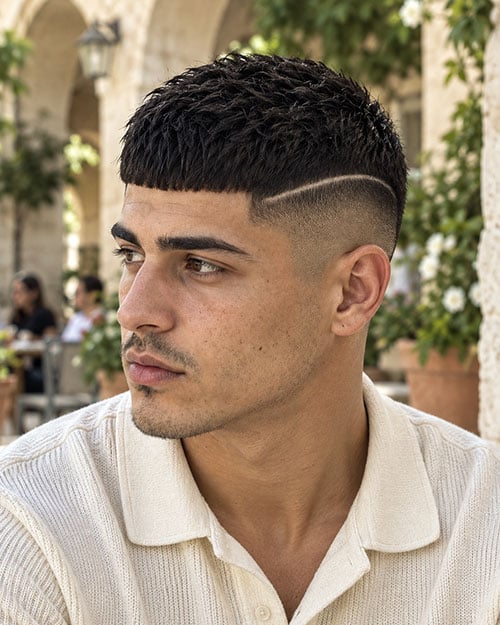
Short and practical. The short French crop keeps the top close while preserving a small fringe that separates it from a crew cut or uniform buzz cut. With less length to hide behind, the head shape and natural growth pattern become more obvious. A strong crown, front cowlick or uneven density may need slightly more hair than the reference photo suggests. The sides can be faded for a sharper outline or left with more grain for a quieter finish. The fringe still needs to look intentional, even when it is only a few millimeters deep. If the barber takes it too high or removes too much weight, the cut loses the front edge that makes it read as a French crop.
How To Style: On dry hair, emulsify a small amount of matte paste or texture powder and press it lightly across the top. Work in the direction of growth rather than scrubbing the hair randomly. The product should reveal the cut’s texture without making the short strands spike or clump together.
Best For: Straight, coarse or tightly textured hair with predictable growth; oval, square and round faces that benefit from a compact outline.
7. Long French Crop
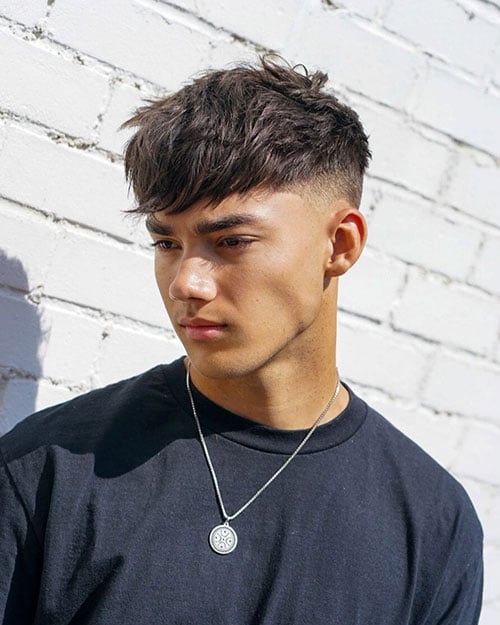
More length changes the character of the cut. A trendy longer French crop features a thicker, lengthier fringe that sits lower on the forehead, breaks into loose sections or shifts slightly to one side, while the shorter back and sides keep everything under control. It gives wavy hair room to bend and can reduce the visual height of a taller forehead. The challenge is weight. If the crown and corners are left equally heavy, the top can collapse into a shelf. Ask for internal movement while keeping enough strength around the perimeter to hold the shape. This one can usually go longer between full haircuts than a skin-faded crop, although the fringe may need a quick trim before the rest starts to look overgrown.
How To Style: Mist damp hair with sea-salt spray or apply a lightweight styling cream, then blow-dry forward while loosely squeezing the lengths. Use low heat to preserve natural bend. Finish with a small amount of flexible paste through the ends, keeping the roots relatively clean so the longer top does not become heavy.
Best For: Straight or wavy hair with moderate density; oval, diamond and longer faces that benefit from a lower, softer fringe.
8. Messy French Crop
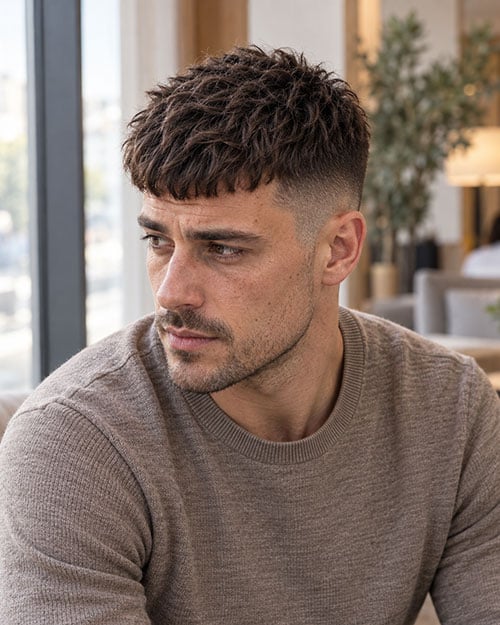
The messy French crop trades a controlled surface for loose separation and a tousled, almost-shaggy fringe. Messy describes the finish, not the quality of the haircut. The outline still needs balance, and the crown needs enough weight to move forward without splitting or standing up in isolated patches. A slight natural wave makes this version easier because the bends create variation without requiring much product. Straight hair can get there too, but it usually needs more internal texture and deliberate blow-drying. Ask for a fringe that breaks into several sections instead of one solid line. The finished cut should feel relaxed, with a few pieces out of place, rather than looking as if every strand was pulled in a different direction.
How To Style: Work sea-salt spray through damp hair, then blow-dry forward and across in alternating directions with your hands. Once dry, spread a light matte clay across your fingertips and squeeze selected pieces. Do not rake through repeatedly after the product sets, since that turns controlled separation into frizz.
Best For: Wavy, straight or thick hair; oval, square and heart-shaped faces that suit an informal fringe with visible movement.
9. French Crop with Blunt Fringe
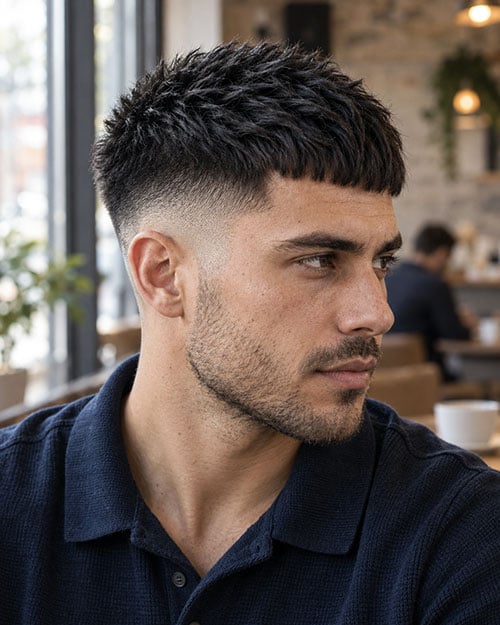
The hard horizontal fringe is the defining feature. It gives the French crop a sharper, more graphic shape than a broken or textured edge. Straight, dense hair holds the line best, but the depth of the fringe matters as much as its length. Use too little hair and the edge may look thin. Bring too much forward and the top becomes heavy and harder to control. The barber should account for the natural hairline and check the fringe again when it is dry, especially if the hair springs upward. It can visually shorten a taller forehead and add structure to softer features. On a rounder face, keep some height on top and enough separation at the sides to avoid creating too much width.
How To Style: Blow-dry damp hair forward with the nozzle directing airflow from the crown toward the forehead. Apply a small amount of firm matte paste through the top, then use a comb only to establish the line. Finish with your fingers so the surface stays controlled without looking painted flat.
Best For: Straight, dense hair; oval, oblong and square faces, with careful height adjustment for rounder proportions or a low forehead.
10. Messy French Crop with Thick Fringe
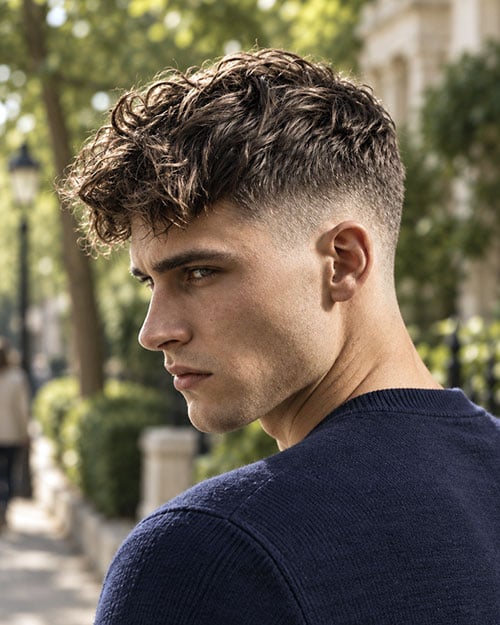
A heavier fringe gives this version its shape. The messy French crop with a thick fringe preserves more density across the front, then breaks that weight into loose, uneven sections. It looks fuller than the standard messy crop and covers more forehead, but it should not fall as one solid block. Thick straight or wavy hair supports the shape best. The barber can remove internal bulk behind the fringe while keeping the front edge substantial, which creates movement without making the ends look thin. Ask for the fringe to sit low enough to feel heavy but short enough to stay out of the eyes. A low taper or fade can clean up the sides, but the fuller top should remain the focus.
How To Style: Apply sea-salt spray or a light pre-styler to damp hair, then blow-dry forward with your fingers, changing direction to prevent a flat sheet. Work a small amount of matte paste through the mid-lengths and ends, then pinch the fringe into broad pieces. Keep heavy product away from the hairline, where it can separate the thick front into greasy gaps.
Best For: Thick straight or wavy hair with strong front density; oval, square and longer faces that suit a substantial, low-set fringe.
11. French Crop with Choppy Fringe
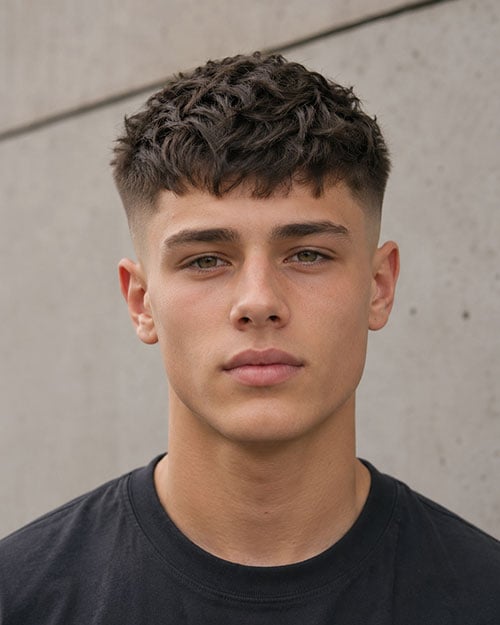
A choppy fringe replaces the solid front edge with short, uneven points. The result feels softer and exposes small sections of the forehead, which makes it easier to work around mild temple recession or an irregular hairline. The pieces should vary subtly in length and width. Deep notches can create obvious gaps in a fine fringe, while heavy thinning leaves the ends weak and wispy. The best version keeps enough density behind the texture for the front to look deliberate. Tapered or faded sides both work, but they are secondary. The fringe is what should define this variation, and I would rather leave it slightly heavier than chase separation by removing too much hair.
How To Style: Dry the hair forward, using your fingers to direct small sections slightly left and right. Warm a pea-sized amount of matte clay between your hands, then pinch the ends instead of coating the entire fringe. Use less product near the hairline, where buildup can make the separated pieces look oily.
Best For: Straight or slightly wavy hair with moderate density; most face shapes and men who want a softer, less rigid front edge.
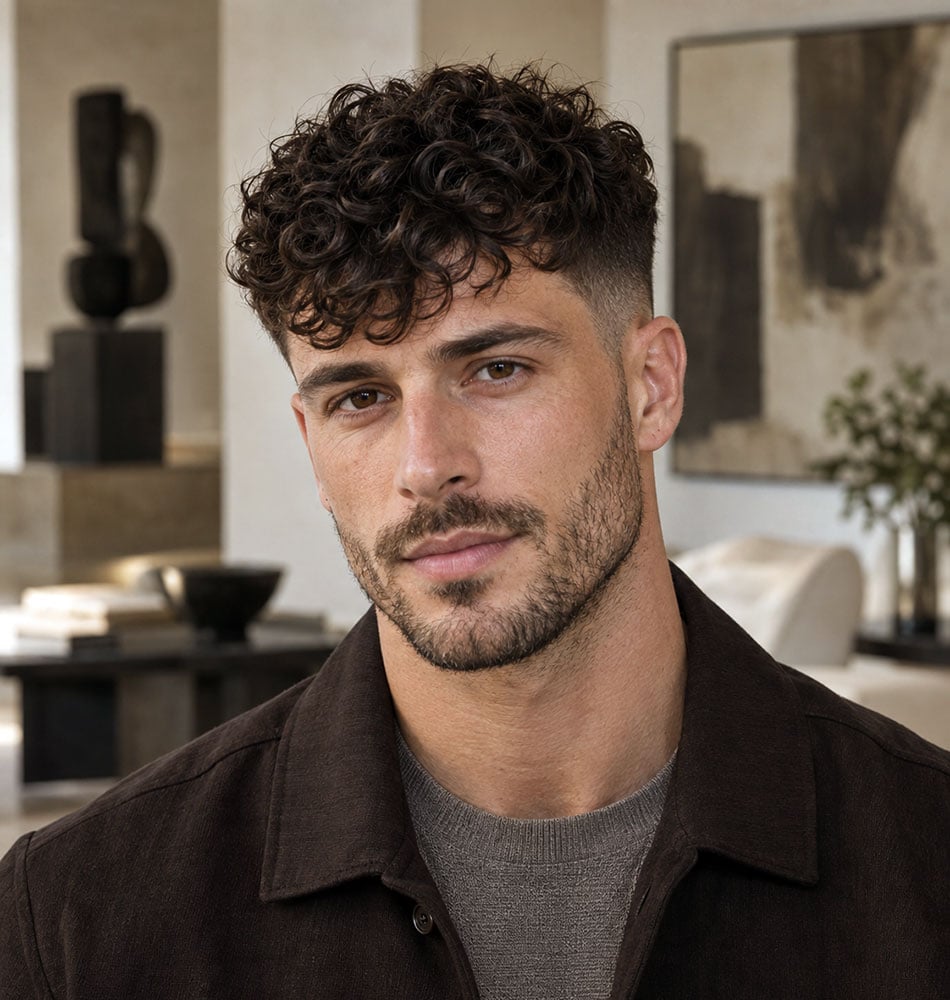
12. Curly French Crop
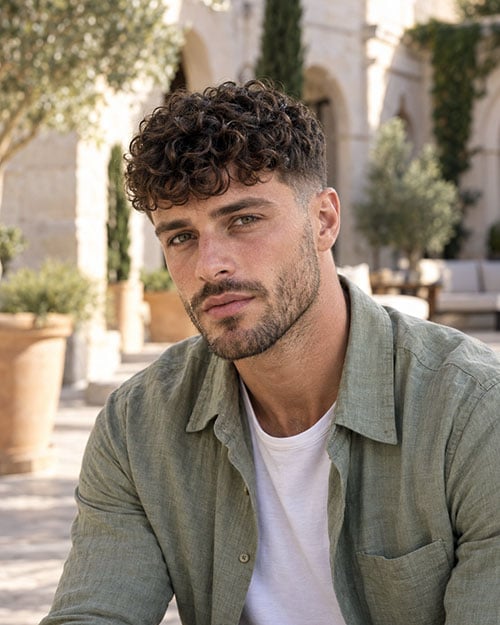
Curls give the French crop a fuller, less rigid fringe while preserving its forward shape. Shrinkage has to guide the cut. Taking the front to its final length while the hair is stretched or wet almost always leaves it shorter than expected once it dries. Enough weight at the hairline keeps the fringe from springing too high, while controlled layering prevents the top from becoming round and disconnected from the sides. A taper or low fade usually gives the most balanced outline, although tighter side work creates stronger contrast. The front does not need a perfectly straight edge. Letting the curls form their own line looks more natural and avoids the gaps that can appear when they are forced into a blunt fringe.
How To Style: Apply leave-in conditioner or curl cream to damp hair, distributing it with your fingers from the crown forward. Scrunch the fringe gently and air-dry or diffuse on low heat. Once dry, separate only the curls that need definition. Avoid brushing through the finished shape, which expands the surface and removes grouping.
Best For: Curly and coily textures with enough front length to form; oval, square, heart and round faces with adjusted side volume.
13. Wavy French Crop
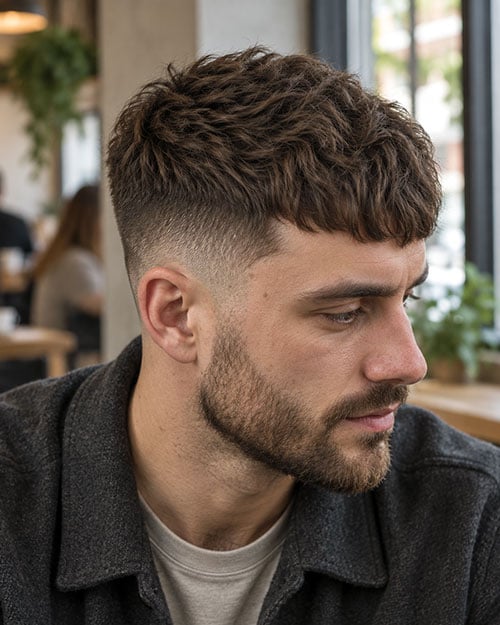
The wavy French crop sits between the neat shape of a classic crop and the looser finish of a messy version. Natural bends add movement without losing the forward direction that defines the cut. The waves should form in larger sections rather than being shredded with aggressive texturizing. Since wavy hair often shortens as it dries, the barber should check the fringe in its natural state before setting the final length. A soft taper supports the movement and keeps the silhouette relaxed. A skin fade creates a much stronger break at the sides. If the hair naturally pushes off-center, work with that direction instead of forcing every strand straight down, provided the overall shape still travels forward from the crown.
How To Style: Apply sea-salt spray or a light curl cream to damp hair, then squeeze the waves while directing them toward the forehead. Air-dry for a softer result or use a diffuser for more control. Finish with a trace of low-shine paste on the ends, avoiding heavy clay that can stretch out the bend.
Best For: Naturally wavy hair with light to heavy density; oval, oblong, square and heart-shaped faces that suit a softer textured fringe.
14. French Crop with High Fade
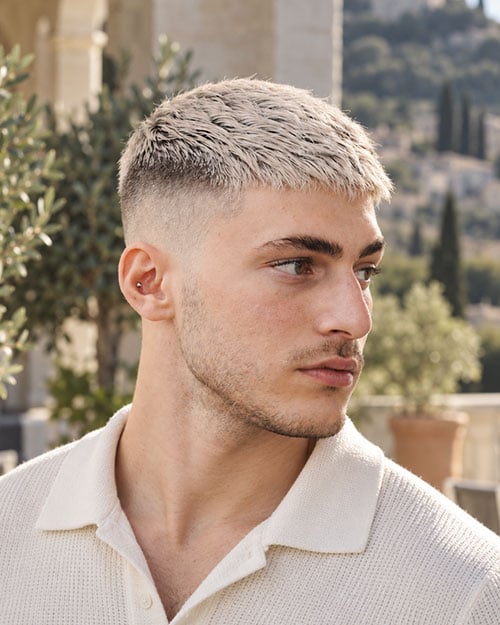
A high fade puts all the attention on the top and fringe. By removing most of the weight from the sides, it creates a sharper, more compressed shape than a low or mid fade. The tradeoff is exposure. Head shape, temple recession and any weakness in the blend become easier to see. The barber should not chase the fade so high that no supporting weight remains beneath the crop. Dense or visibly textured hair usually handles the contrast better than a fine, flat top. It also demands more upkeep because a few weeks of growth will soften the fade quickly. Choose it because you want that stronger outline, not because a high fade is automatically cleaner or better.
How To Style: Use a dryer to direct the top forward while building slight height through the center. Work in a dry matte clay or firm paste, beginning at the back and finishing at the fringe. Keep the surface controlled but not flat, since some dimension helps the top stand up to the exposed sides.
Best For: Dense straight, wavy or coarse hair; round, oval and square faces, provided the head shape supports very short upper sides.
15. French Crop with Skin Fade
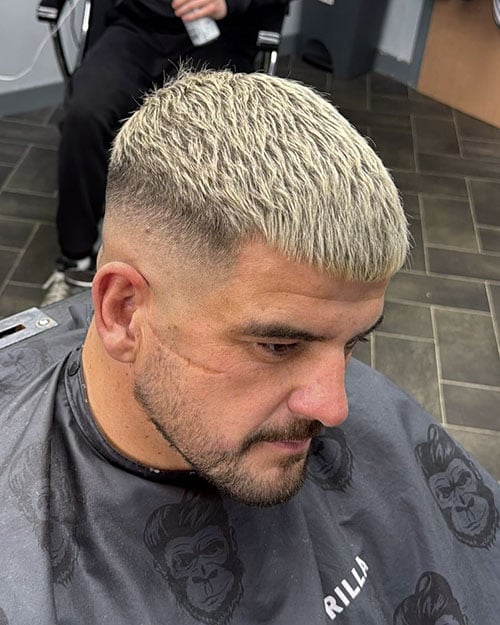
The highest-contrast option. A skin fade takes the shortest part of the blend down to bare skin, creating a clear break beneath the cropped top. Skin describes the starting length, not the height, so the fade can still sit low, in the middle or high on the head. Set that placement before the barber begins. It delivers a very clean outline, but regrowth becomes obvious quickly and exposed skin can draw attention to scars, bumps or uneven pigmentation. The top needs enough density or texture to carry the visual weight of the cut. On very fine hair, leaving more darkness through the upper sides often looks better than stretching the skin transition too high.
How To Style: Pre-dry the hair forward, then use a small amount of matte clay or paste to reinforce texture and hold. Concentrate the product on the top and ends, not the scalp. With such clean sides, avoid overworking the fringe into stiff spikes because the combined contrast can make the cut look harsher than intended.
Best For: Moderate to dense hair of most textures; oval, square and round faces, with scalp condition and head shape considered first.
16. French Crop with Drop Fade
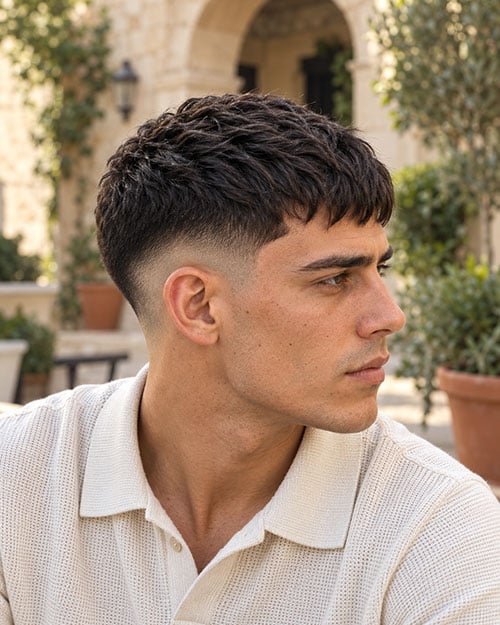
The French crop with a drop fade curves lower behind the ear instead of running level around the head. That drop preserves more coverage toward the back and creates a rounded profile that follows the skull. It is useful when a standard fade makes the haircut look too boxy, especially with a slightly fuller crown. The curve should be obvious enough to feel intentional but not so dramatic that it competes with the fringe. Ask the barber where the drop will sit and how it will reconnect through the occipital area at the back of the head. It works with a blunt or textured top, although some surface movement usually complements the curved outline better than a completely flat finish.
How To Style: Direct the top forward and slightly inward from both sides so the surface follows the rounded outline of the fade. Use a medium-hold matte paste for separation without stiffness. If the crown tends to split, dry that area first in the opposite direction, then bring it forward once the roots have reset.
Best For: Straight, wavy and dense hair; oval, square and round faces, especially when a curved fade better complements the head shape.
17. French Crop with Line Up
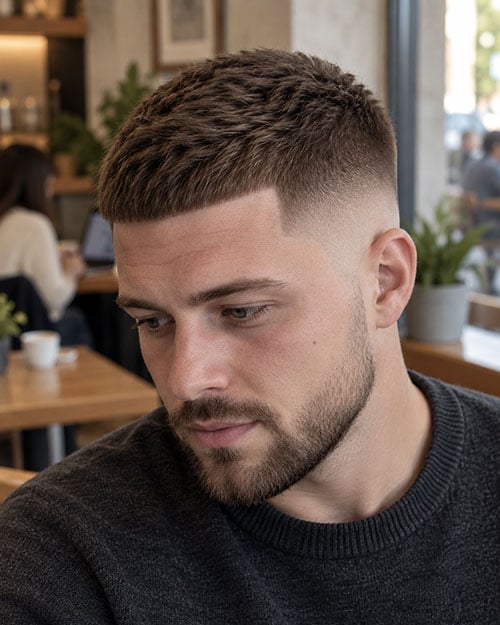
A line up adds crisp definition at the temples and around the front hairline. On a French crop, the fringe covers much of the natural front edge, so the sharpest detail often sits at the corners and sideburns. The line should support the fringe rather than compete with it. Coarse, curly and coily hair usually holds the outline best. The main mistake is pushing the corners back to manufacture symmetry. That makes the haircut harder to maintain and can exaggerate recession as it grows. A softer fringe balances the precision around the perimeter, while a blunt fringe creates a more geometric finish. Either works, but the hairline should stay as natural as possible.
How To Style: Apply a light cream or matte paste to damp hair and direct the top forward without coating the edged hairline. Define curls or texture with your fingers, then leave the perimeter clean. Heavy product at the temples can blur the line up and make new growth more noticeable within a few days.
Best For: Coarse, curly or coily hair with a stable hairline; square, oval and round faces that suit a crisp perimeter.
18. Disconnected French Crop
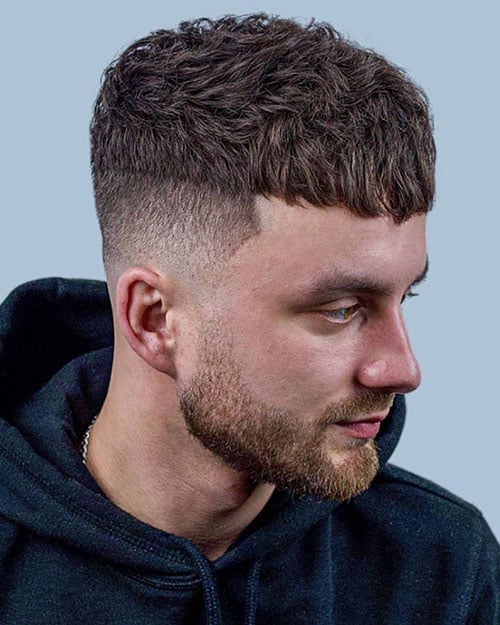
The disconnected French crop leaves a visible break between the longer top and the short undercut beneath it. That separation creates a stronger ledge and lets more length sit over the upper sides, giving the fringe a heavier presence. It photographs well on dense, straight or wavy hair, but the grow-out is less forgiving because the two sections develop at different rates. The starting point of the disconnection should be deliberate, with enough length above it to stop the corners from sticking outward. This is a stronger design choice, not a default way to remove bulk. I would only use it when the head shape, density and willingness to maintain the contrast all support the result.
How To Style: Blow-dry the top forward and slightly down at the corners to keep the overhang controlled. Use a firm matte paste or clay through the mid-lengths and ends. Do not overload the roots near the disconnection, since added stiffness can cause the top to lift away from the sides and expose an unintended shelf.
Best For: Dense straight or wavy hair; oval, square and longer faces, plus men comfortable with stronger contrast and a less seamless grow-out.
19. Burst Fade French Crop
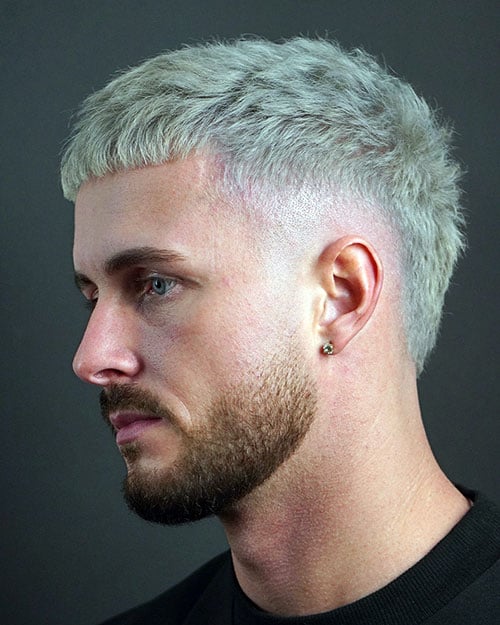
The burst fade French crop wraps the shortest transition around the ear while leaving more length toward the back. It creates a curved side profile and can hint at a subtle mullet without requiring a long neckline. The burst needs enough definition to look intentional, but it still has to connect cleanly into the top. If the fade travels too far behind the ear, the remaining back section can look isolated. A textured or slightly messy fringe usually fits the shape better than a flat, formal top. This is less universal than a low or mid fade, but that is the point. It works for men who want the crop to look different from the standard short-back-and-sides version.
How To Style: Apply texture spray to damp hair and dry the top forward with loose finger movement. Use a small amount of matte clay to separate the fringe, then smooth any excess over the crown. Keep the back natural and controlled so the burst shape remains the main side detail rather than competing with exaggerated volume.
Best For: Straight, wavy, curly or coarse hair with moderate density; oval, square and round faces that can carry stronger side detail.
20. Short Textured Crop with Taper Fade
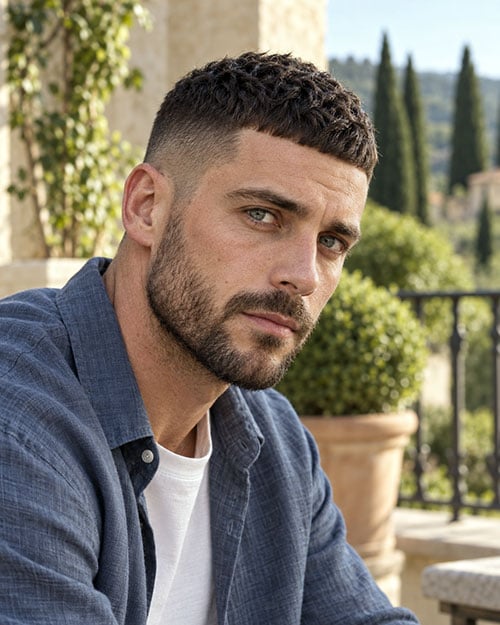
The short textured crop with a taper fade keeps the top compact and broken while cleaning the sideburns and neckline without removing all the weight from the sides. The softer transition makes it easier to wear than a full skin fade and gives the upper sides enough density to support the crop. The top still needs sufficient length for point cutting or light channeling to create separation. If the barber removes too much weight, the texture can turn spiky on coarse hair or expose the scalp on fine hair. Ask for a controlled taper around the temples and neckline, with the top directed forward and the fringe kept short but visible.
How To Style: Start with damp hair and blow-dry it forward, lifting small sections with your fingers to create separation. Work a small amount of matte paste or clay from the crown toward the fringe. Pinch a few pieces into place, but avoid coating every strand or forcing the short top into stiff spikes.
Best For: Straight, wavy or thick hair; oval, square and round faces that suit a compact top with softer contrast at the sides.
21. Shaggy French Crop
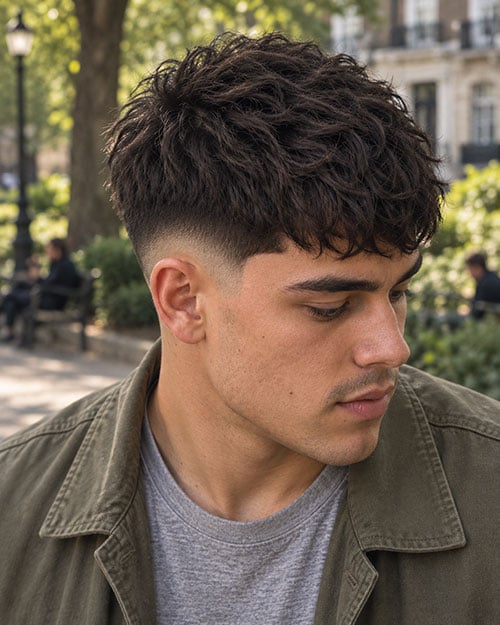
The shaggy French crop pushes the cut toward a softer, grown-out shape. Longer layers move forward from the crown, while the fringe falls in loose, irregular pieces instead of forming a short, controlled edge. Unlike a standard messy crop, the shaggy effect comes from added length and layering, not styling alone. The sides should retain enough weight to support the fuller top, since cutting them too tight can make the haircut look disconnected. I would remove internal bulk where needed but avoid heavily thinning the ends, which can leave the fringe weak or frizzy. Ask for a scissor-cut shape with natural movement, a relaxed perimeter and enough length through the front to sweep, separate or fall slightly off-center.
How To Style: Apply sea-salt spray or a lightweight styling cream to damp hair, then blow-dry forward using your fingers to lift and loosen the layers. Use low heat to preserve natural movement. Finish with a small amount of flexible matte paste through the ends, allowing the fringe to separate rather than forcing every piece into place.
Best For: Medium to thick straight or wavy hair; oval, square and longer faces that suit a fuller top and relaxed fringe.
How To Style A French Crop Haircut
Most French crops look best with forward direction, controlled texture and a low-shine finish. A matte paste suits the widest range of straight and wavy hair, while clay adds grip to dense hair and styling cream keeps fine or dry strands flexible. The key is to establish the shape before applying the finishing product, especially around the crown and fringe.
- Start with damp hair. Towel-dry until the hair is no longer dripping but still has enough moisture to reshape. Completely wet hair takes longer to control and can hide how the fringe will sit when dry.
- Reset difficult growth patterns. If the crown splits or the front lifts, briefly blow-dry that area against its natural direction. Bring it forward once the roots begin to settle.
- Add a pre-styler when needed. Use a light texture spray for more separation or a small amount of styling cream for control. Fine hair usually needs less product, not a stronger layer.
- Dry from the crown forward. Use your fingers for a broken finish or a vent brush for a neater surface. Keep the airflow low and close to the head unless you want extra height through the top.
- Apply the finishing product from back to front. Emulsify a small amount of matte paste or clay, work it through the top and use only the residue on the fringe. Loading the front first can expose the scalp and separate the edge.
- Set the final shape. Smooth the surface for a classic crop or pinch a few sections for texture. Stop once the shape is established because repeated handling can create clumps, frizz or an overly worked finish.
What To Tell Your Barber
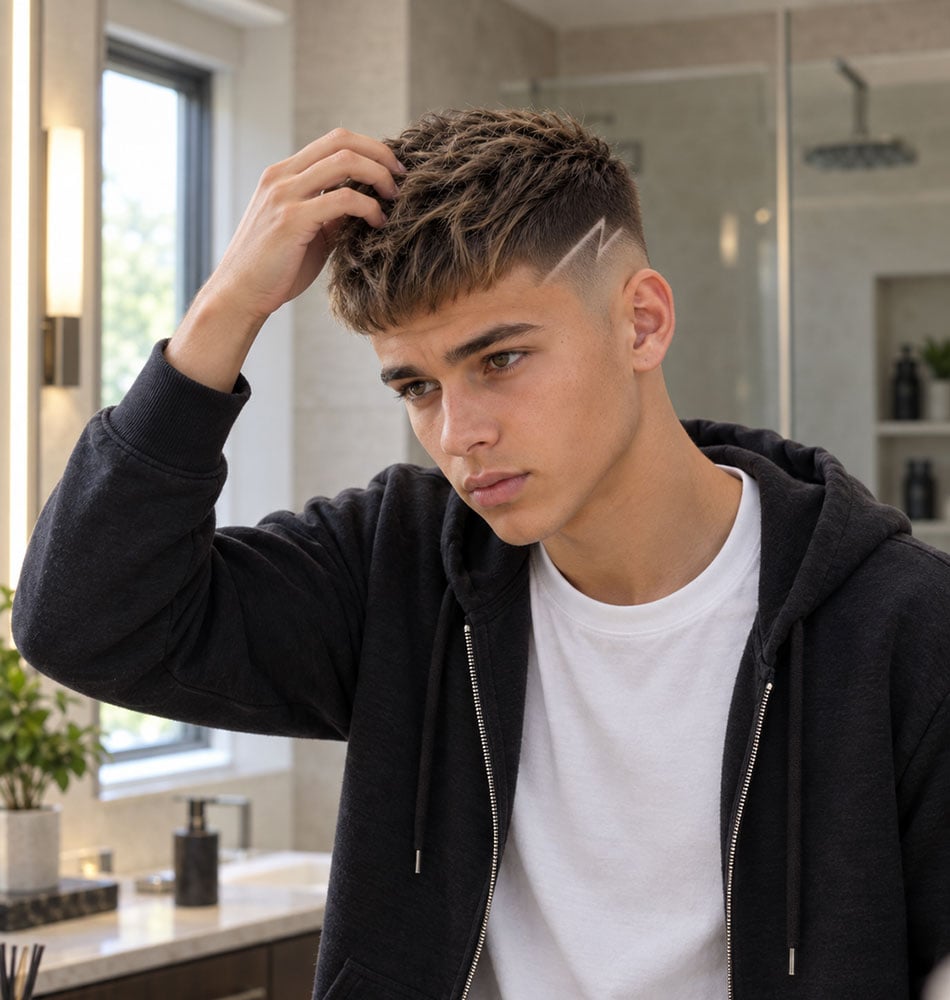
Bring a reference that shows the front, sides and back whenever possible. Tell the barber how much forehead you want the fringe to cover, whether the edge should be blunt or broken, and how much daily texture you intend to create. Specify the side treatment separately. Taper, low fade, mid fade, high fade and skin fade describe different decisions, and skin refers to the shortest length rather than the height.
Ask the barber to account for your crown, cowlicks, temple shape and how the fringe sits when dry. If your hair is fine, request that useful weight be preserved instead of automatically reaching for thinning shears. If it is curly or wavy, have the front checked after the hair contracts into its natural pattern. The photograph establishes the goal, but these adjustments make the haircut work on your head.
How Often Should You Get A French Crop Cut?
Most French crops hold their shape for about three to five weeks. A skin fade or precise line up may look noticeably grown out after two to three weeks, while a low taper or softly clipped side can remain presentable longer. The fringe is often the first part to need attention because a small increase in length changes where it sits on the forehead. If you prefer a softer crop, allowing it to grow for four to six weeks can work as long as the crown and sides remain balanced.
French Crop Haircut FAQs
What Is a French Crop Haircut?
A French crop is a short men’s haircut with the top directed forward into a visible fringe. The sides and back may be scissor-cut, tapered or faded, while the top can be worn smooth, choppy, curly or heavily textured. Its defining feature is the forward shape and fringe, not a particular type or height of fade.
What’s the Best Way to Style a French Crop Haircut?
The best general method is to direct damp hair forward from the crown with a blow dryer, then apply a small amount of matte paste or clay from back to front. Use your fingers to separate selected pieces or smooth the surface for a neater finish. Keep most of the product away from the fringe so it does not split or look greasy.
Is a French Crop Good for a Receding Hairline?
A French crop can work well for a receding hairline because its forward fringe softens the temples and reduces the contrast between the hairline and forehead. The result still depends on having enough density near the front. A broken edge usually looks more natural than a heavy, perfectly straight fringe when the recession is uneven.
Does a French Crop Work with Thin Hair?
Yes, a French crop can work with thin hair when the top is kept relatively short and the barber preserves useful weight. Heavy thinning, wet products and deep separation may expose more scalp. A soft taper or lower fade often creates better balance than removing too much density from the sides.
Can a French Crop Be Worn Without A Fade?
Yes, a French crop can be worn without a fade. The sides may be scissor-cut, clipper-cut to one length or gradually tapered. A fade is an optional side treatment, not a defining part of the haircut. Leaving more coverage creates a softer shape and generally makes the grow-out less noticeable.
What Is the Difference Between a French Crop and a Caesar Cut?
A Caesar cut usually keeps the top shorter and more uniform, with a compact fringe that follows the same controlled direction. A French crop often leaves more length and styling freedom on top, allowing for stronger texture, curls or a longer front. The terminology overlaps, so a clear reference photograph is more reliable than the haircut name alone.
The right French crop is determined less by the trendiest fade and more by the relationship between the fringe, top weight and natural growth pattern. Choose the version whose shape works with your hair first, then decide how much contrast and maintenance you want from the sides.
